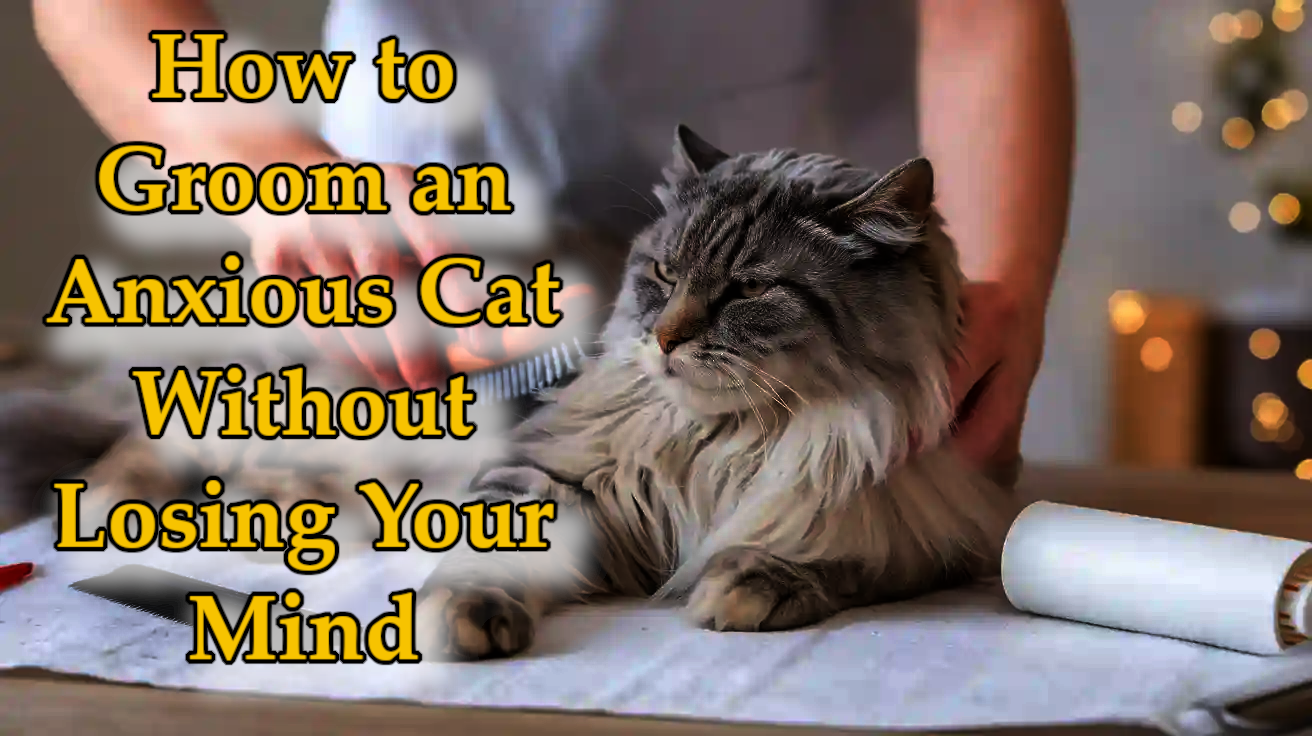
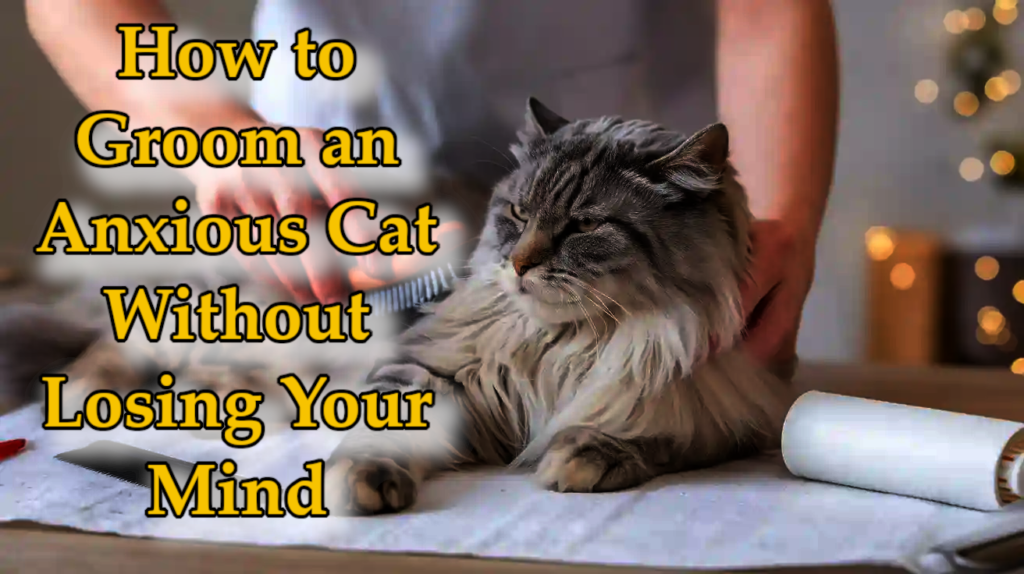
How to Groom an Anxious Cat Without Losing Your Mind (Or Getting Scratched)
By Sarah Johnson | CatParentsGuide
You have a cat who hides under the bed the moment you pick up a brush. You have tried everything. You have been gentle. You have used treats. Nothing works.
Here is the truth most articles will not tell you: grooming an anxious cat is not about finding the perfect brush or the right shampoo. It is about understanding why your cat panics and working with that fear, not against it.
I have worked with dozens of anxious cats over the years, including my own rescue who would shake violently at the sight of a comb. What I learned changed everything. Your cat is not being difficult. Your cat is terrified. And once you accept that, you can start fixing the problem.
Quick answer: Groom an anxious cat by first desensitizing them to grooming tools through positive association (treats near the brush for 7-10 days), using a grooming glove instead of a brush, keeping sessions under 2 minutes, and always stopping at the first sign of stress.
Why Your Cat Panics During Grooming (It Is Not About You)
Most cat owners assume their cat hates them or is being stubborn. That is not what is happening. Your cat panics for one or more of these reasons.
1. Past Pain
Maybe someone once pulled a mat too hard. Maybe a nail was cut too short. Maybe water was too hot or too cold. Cats remember pain for years. Your cat is not holding a grudge. Your cat is terrified of feeling that pain again.
This is clinically referred to as a negative associative memory. One bad experience can create a lifelong fear response.
2. Sensory Overload
Cats have much more sensitive hearing than we do. The snip of clippers sounds like a gunshot to them. The spray of water sounds like danger. What feels like a normal grooming session to you feels like being trapped in a noisy, chaotic room to your cat.
3. Physical Discomfort
This one gets overlooked constantly. Older cats often have arthritis. Brushing their back hurts. Lifting their paw hurts. They cannot tell you “my joints ache.” They can only hiss or run away. I learned this the hard way with my senior cat, who tolerated brushing for years until suddenly she did not. The vet found arthritis in her spine.
4. Loss of Control
Cats are not dogs. They do not naturally accept being held in place. When you restrain your cat for grooming, their brain screams “predator.” They are not being dramatic. They are following an instinct that kept their ancestors alive.
“Understanding these reasons is the first step. The solutions come from working with these fears, not fighting them.”
The Single Most Important Step Before You Pick Up Any Tool
Do not touch your cat with a brush for at least one week. I am serious.
The biggest mistake people make is trying to groom an anxious cat without doing the groundwork first. You need to rebuild trust before you can groom. This process is called desensitization and counter-conditioning. It sounds fancy, but it just means: slowly getting your cat used to the tool while pairing it with something positive.
Here is what you do instead.
The 7-Day Desensitization Protocol
Days 1 to 7: Place the brush near your cat’s food bowl. Let them eat next to it. Do not pick it up. Do not move it toward them. Just let it exist in their safe space.
Every time your cat looks at the brush or sniffs it, give them a treat. Not a regular treat. Something special. Freeze-dried chicken. A bit of tuna. Something they only get during this training.
By day three or four, most cats start to ignore the brush. By day seven, some will even rub against it. That is when you know you are ready for the next step.
I did this with a foster cat who had been abused. She would hiss if I even walked near her with a brush. After ten days of this food-brush association, she let me touch her back with the brush handle. It took another two weeks before I could actually brush her. But it worked.
How to Actually Brush an Anxious Cat (Step by Step)
Once your cat is comfortable with the brush being nearby, you can start the actual grooming. But not the way you think.
Step 1: Brush Without Brushing
Take the brush and simply rest it on your cat’s back for one second. Then remove it. Give a treat. That is the whole session. Do this once a day for several days.
Step 2: One Stroke
After your cat accepts the brush resting on them, do one gentle stroke from shoulder to mid-back. Stop. Give a treat. Do not do a second stroke. End the session. Repeat this for several days.
Step 3: Two Strokes
Gradually increase to two strokes. Then three. Then four. But never go beyond what your cat comfortably accepts.
Step 4: Move to New Areas
Once your cat treats brushing on their back as normal, try the sides. Then the chest if your cat allows it. Save the belly, tail, and paws for last. Some cats never accept brushing on their belly. That is fine. Do not force it.
The entire process from step one to step four might take a month. That is normal. You are not failing. You are building trust.
What to Do When Your Cat Shows Stress Signals
You need to learn your cat’s specific stress signals. Every cat is different.
My cat Luna flattens her ears when she is about to panic. My friend’s cat starts twitching her tail. Another cat I know licks her lips repeatedly before she hisses.
Here are common stress signals to watch for:
- Tail twitching or thumping
- Skin rippling along the back
- Ears turning sideways or flattening
- Dilated pupils even in bright light
- Trying to move away from you
- Low growling or hissing
The moment you see any of these, stop. Not “finish this section.” Stop immediately. Put the brush down. Offer a treat if your cat will take it. Let them leave.
If you push through these signals, you are teaching your cat that grooming is something to fear. Each time you stop when they ask you to stop, you teach them that you listen. That builds trust.
I learned this after getting scratched badly by a foster cat. I saw her ears go flat. I kept brushing anyway. She swatted me. That scratch was my fault, not hers. She had warned me. I did not listen.
The Best Tools for Anxious Cats (And Which to Avoid)
Not all grooming tools are created equal for anxious cats. Here is a quick reference table.
| Tool Type | Best For Anxious Cats? | Why It Works / Why to Avoid |
|---|---|---|
| Grooming Glove | Excellent Starter Tool | Mimics natural petting. No scary handles or metal pins. Most anxious cats do not even realize they are being groomed. View Delomo Grooming Glove on Chewy |
| Rubber Brush | Good for massage and loose hair | Soft rubber nubs massage rather than scrape. Completely silent. No scary sounds. View KONG ZoomGroom Official Product |
| Slicker Brush | Avoid initially | Can feel sharp and prickly on sensitive skin. The metal pins look threatening to cats. Only introduce after your cat accepts gentler tools. |
| Electric Clippers | Avoid entirely for home use | The buzzing sound triggers “predator” panic in most cats. Leave shaving to professional groomers or vets. |
Start with a grooming glove. These silicone gloves let you pet your cat while removing loose fur. Most anxious cats do not even realize they are being groomed. They just think you are petting them. This is your best entry point.
Try a soft rubber brush next. The KONG ZoomGroom is a good option. It has soft rubber nubs that massage rather than scrape. It does not look or sound like a traditional brush.
Avoid slicker brushes with metal pins. These can feel sharp and prickly, especially on cats with sensitive skin. If you must use one for mats, introduce it very slowly and only after your cat accepts gentler tools.
For nail trims, use guillotine-style clippers. They are quieter than scissor-style. But honestly, for severely anxious cats, consider having a vet or professional groomer handle nail trims. It is worth the money to avoid traumatizing your cat.
Skip the electric clippers entirely. The noise alone will terrify most anxious cats. If your cat needs a shave for medical reasons, have a vet do it under sedation.
How to Handle Nail Trims When Your Cat Hates Paw Handling
Nail trimming is the hardest task for most anxious cats. Paw handling feels vulnerable. The clipping sound is scary. And the consequences of cutting the quick are painful.
Here is a realistic approach.
Week 1: Touch your cat’s paw during normal petting sessions. Just a light touch. Give a treat. Do this daily.
Week 2: Bring the clippers into the room. Do not use them. Just let your cat see them. Give treats. Do this daily.
Week 3: Hold the clippers near your cat’s paw without clipping. Treats.
Week 4: Make the clipping sound near your cat’s paw but not on the nail. Treats.
Week 5: Attempt to clip one nail. Just one. Then stop. Give a huge reward. Try another nail tomorrow.
If your cat panics at any stage, go back a step. This process might take two months. That is fine.
For some cats, it is never worth the stress. If your cat becomes aggressive or hides for hours after nail trim attempts, stop. Take them to a vet or groomer every few weeks. The money is worth preserving your relationship with your cat.
What About Bathing? (Spoiler: You Probably Do Not Need To)
Most cats never need a water bath. They are self-cleaning. Their tongues and saliva are nature’s grooming tools.
If your cat has gotten into something toxic or has a medical skin condition requiring medicated shampoo, then a bath is necessary. Otherwise, skip it.
For dirty paws, a greasy coat, or general odor, use waterless methods instead:
- Cat grooming wipes for spot cleaning
- Waterless foam shampoo (rub in, towel off)
- A damp cloth for mud or litter residue
I have not given my cat a full water bath in four years. She is clean, healthy, and smells fine. Do not let anyone tell you that cats need regular baths. They do not.
Calming Aids That Actually Work for Anxious Cats
Some products genuinely help. Some are a waste of money. Here is what I have found useful.
Feliway spray or diffuser. This synthetic pheromone mimics the calming scent cats naturally produce. Spray it on the grooming area fifteen minutes before you start. It does not work for every cat, but it helps many. I have seen it turn a panicking cat into a calm one. Visit the Official Feliway Website
Calming treats with L-theanine. These take about thirty minutes to kick in. Test them on a normal day first, not a grooming day. Some cats love them. Others ignore them. They are worth trying.
Catnip. For some cats, catnip has a calming effect, especially when eaten. For others, it causes hyperactivity. Test this before grooming day.
What does not work: Human anti-anxiety medications (toxic to cats), essential oils (many are poisonous), and CBD products not approved by your vet.
Always talk to your veterinarian before giving your cat any supplement or medication.
When to Stop Trying and Get Professional Help
There is no shame in admitting that you cannot groom your anxious cat yourself. Some cats are too traumatized, too aggressive, or too physically sensitive for home grooming.
You should seek professional help if:
- Your cat bites or scratches severely during grooming attempts
- Your cat hides for more than 24 hours after grooming
- Your cat shakes, pants, or loses bladder control from fear
- You have tried desensitization for two months with no improvement
- Your cat has severe mats that need shaving
Professional cat groomers exist for a reason. Many specialize in anxious and aggressive cats. Some will even come to your home. Veterinary clinics can also perform sedated grooming for extreme cases.
Paying a professional is not giving up. It is choosing your cat’s mental health over your pride.
A Realistic Timeline for Grooming an Anxious Cat
Do not expect overnight results. Here is what a realistic timeline looks like.
- Week 1 to 2: Desensitization only. No grooming. Just pairing tools with treats.
- Week 3 to 4: One-second brush touches. One-second paw touches. Extremely brief.
- Week 5 to 6: Two to three brush strokes. Possibly one nail trimmed if your cat tolerates paw handling.
- Week 7 to 8: Five to ten brush strokes. Regular short sessions.
- Month 3 and beyond: Your cat tolerates brief grooming sessions. You know their limits. You stop before they panic.
Some cats progress faster. Some take six months. A few will never tolerate grooming and will need professional help forever. All of these outcomes are acceptable.
Frequently Asked Questions
How do I know if my cat is anxious or just being stubborn?
An anxious cat shows physical signs: dilated pupils, flattened ears, tail twitching, shaking, panting. A stubborn cat is usually calm but uncooperative. If you see fear, treat it as anxiety.
Can I use a muzzle or restraint bag for grooming?
Only as a last resort. Restraint devices increase fear for most cats. They should only be used under professional guidance. If you feel you need to restrain your cat to groom them, stop and hire a professional instead.
My cat is fine with brushing but hates nail trims. What do I do?
This is very common. Focus on the nail trims separately. Use the desensitization process I described. If your cat never accepts nail trims, have a vet or groomer do them. That is a perfectly fine solution.
How often should I groom my anxious cat?
Short-haired cats: once every one to two weeks is plenty. Long-haired cats: two to three times per week, but keep sessions very short (two to three minutes).
What if my cat has mats that need to be removed but hates grooming?
Mats hurt. They pull on the skin. Removing them is necessary. For severe mats, do not try to cut them out yourself. Cat skin is very thin and easy to cut. Take your cat to a professional groomer or vet. They can safely shave the mats, often with sedation if needed.
Will my cat ever enjoy grooming?
Some anxious cats learn to tolerate grooming. A few even learn to enjoy it. Most simply learn that grooming is not a threat. That is enough. Do not push for enjoyment. Aim for calm acceptance.
Putting It All Together
Grooming an anxious cat is not about technique. It is about trust.
You cannot force a scared cat to accept grooming. You can only show them, slowly and consistently, that grooming does not hurt. That you will stop when they ask you to stop. That the brush brings treats, not pain.
Some cats learn this in weeks. Some take months. A few never fully accept it. All of these outcomes are fine.
Your goal is not a perfectly groomed cat. Your goal is a cat who feels safe with you. Grooming is just one small part of that relationship. If you have to pay a professional to handle the grooming so that you can focus on being a safe person for your cat, that is a win.
Now pick one small step from this article. Just one. Leave the brush near the food bowl tonight. That is all. No grooming yet. Start there.
If you have an anxious cat, you already know that small steps are the only steps that work.
About the author: I have been working with anxious and rescue cats for over eight years. My own cat, Luna, came from a hoarding situation and would not let anyone touch her for months. Today, she sits on my lap while I brush her. It took a year to get there. It was worth every single day of patience.
Related reading from CatParentsGuide:
7 Signs Your Cat Is Stressed During Grooming (And When to Stop)
How to Keep Your Cat Calm During Grooming (12 Proven Methods)
Cat Age Calculator: Convert Cat Years to Human Years