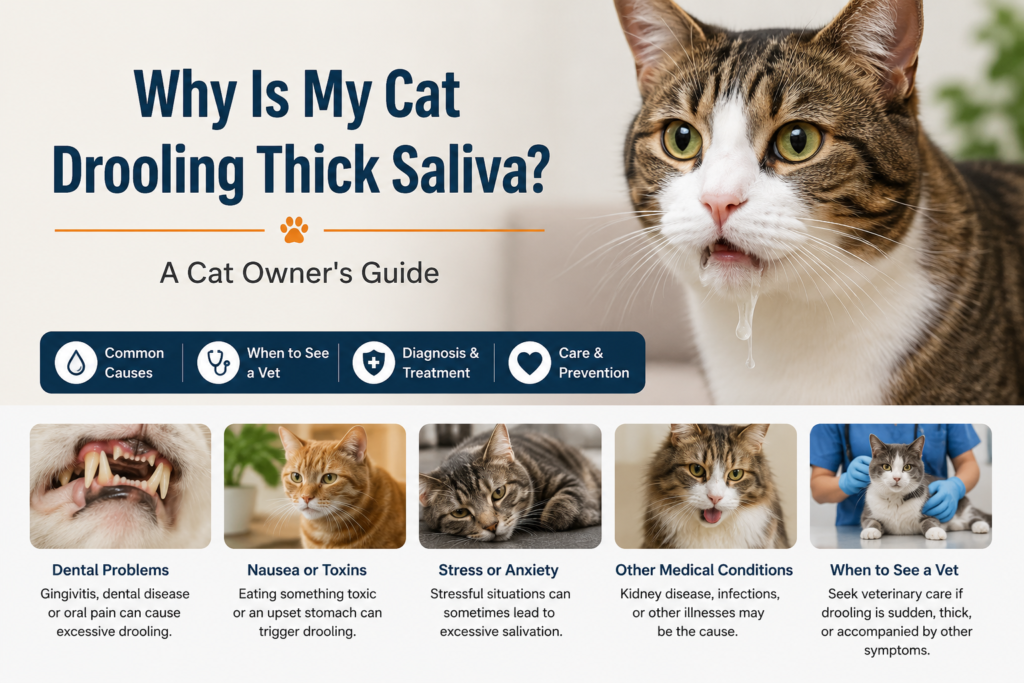
Why Is My Cat Drooling Thick Saliva? A Cat Owner’s Guide
By Sarah Johnson | CatParentsGuide
You reach down to pet your cat and feel it – a wet, sticky patch on her chin. When you lift her head, a thick string of saliva stretches from her mouth to your hand. Your first thought is probably: is this normal?
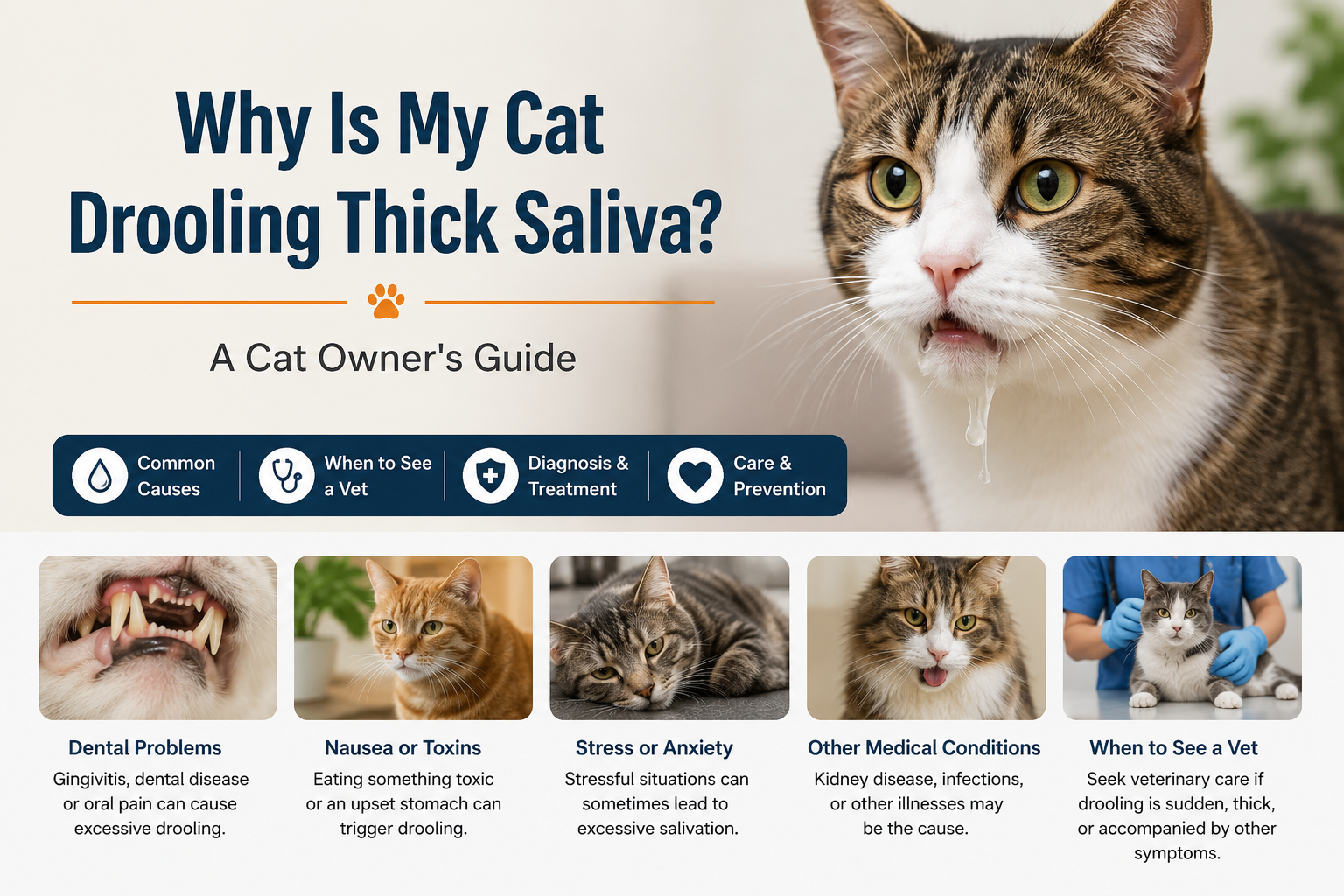
The short answer is that thick, sticky drooling in cats is usually not normal. While some cats drool when they’re deeply relaxed, thick saliva – especially if it happens suddenly – often signals a problem that needs veterinary attention. A cat that has never drooled before and suddenly develops thick, ropey saliva should be seen by a vet as soon as possible.
Here’s what you need to know about why this happens and when to worry.
URGENT: If your cat’s drool contains blood, has a yellow or brown color, or has a foul odor, this is an emergency. Also seek immediate help if your cat is not eating, vomiting, or acting lethargic.
First, A Quick Clarification: What Is “Normal” Drooling?
Not all drooling is bad. Some cats drool a little when they’re extremely relaxed. You might see a damp spot on your pillow where your cat was sleeping, or a thin, watery droplet on her chin while she’s purring on your lap. This type of drooling usually happens in moments of pure contentment and the saliva is thin, clear, and not excessive.
What I’m talking about in this article is different. Thick, sticky, ropey saliva that hangs from your cat’s mouth – especially if this is new behavior – is not typical. If the saliva is discolored (yellow, brown, or tinged with blood) or smells bad, that’s an even stronger sign that something is wrong.
Related reading: If you’re concerned about other sudden changes in your cat’s behavior, read Senior Cat Sleeping in the Litter Box: What Does It Mean? – another warning sign many owners miss.
The Most Common Reasons Cats Drool Thick Saliva
Let me walk you through the most likely causes, starting with the most common.
Dental Disease and Mouth Pain
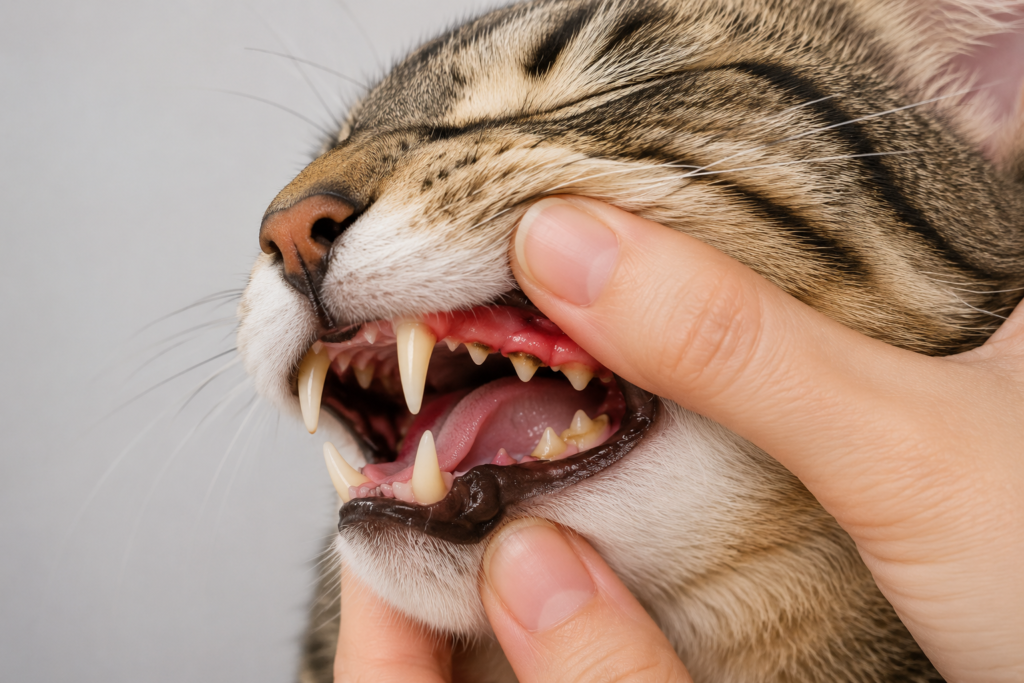
This is the #1 reason cats drool thick saliva. According to veterinarians, when a cat’s mouth hurts, swallowing becomes painful. Instead of swallowing her saliva, she simply lets it leak out. Over time, that saliva becomes thick and ropey.
Dental problems that cause drooling include gingivitis (inflamed gums), stomatitis (severe inflammation of the entire mouth), FORL (feline odontoclastic resorptive lesions) – a painful condition where the cat’s own immune system attacks her teeth, and broken or abscessed teeth.
Watch for these additional signs: Bad breath, difficulty eating or dropping food, pawing at the mouth, reluctance to eat hard food, weight loss, and bleeding or red gums.
A veterinarian needs to examine your cat’s mouth. In many cases, this requires sedation because cats in pain will not allow a thorough exam while awake.
Kidney Disease (Uremia)
This is a serious concern, especially for senior cats. When kidneys fail, toxins build up in the bloodstream – a condition called uremia. These toxins can cause ulcers to form in the mouth, which leads to drooling.
The saliva may be thick and sticky, and your cat might also have very bad breath. Other signs of kidney disease include increased thirst and urination, weight loss, vomiting, and lethargy.
If your cat is older and suddenly starts drooling thick saliva, kidney disease should be on your list of possibilities. A simple blood test at your vet can check kidney values. For senior cats, understanding their life stage is crucial – use our Cat Age Calculator to know what health issues to watch for at each age.
Diabetes Mellitus
While less directly linked to drooling than dental or kidney issues, diabetes can contribute to oral problems in cats. Diabetic cats are more prone to infections, including dental infections, which can then cause drooling. They also may develop a condition called diabetic neuropathy that affects their ability to swallow normally.
If your cat has diabetes and is suddenly drooling thick saliva, read our complete guide: Diabetes Mellitus in Senior Cats: Tips for Supporting Blood Sugar Levels Safely.
Viral Infections (Especially Calicivirus)
Feline calicivirus is a common cause of upper respiratory infections in cats, and it frequently causes ulcers on the tongue and palate. These ulcers are painful, and the pain makes cats drool.
Other signs of calicivirus include: Sneezing, runny nose and eyes, fever, lethargy, and loss of appetite. This is highly contagious between cats, so if you have other cats, keep them separated until you get a diagnosis.
Nausea and Digestive Upset
Cats drool when they feel nauseous, just like humans produce more saliva before vomiting. The drool is often thin and watery rather than thick, but it can become sticky if the nausea persists.
Other signs of nausea in cats include: Lip smacking or licking, hiding or decreased interaction, not eating as much, and retching without producing anything.
Nausea can be caused by something simple like a hairball, or something serious like pancreatitis, inflammatory bowel disease, or intestinal blockage. If the drooling continues for more than a day, see your vet.
A Foreign Object Stuck in the Mouth or Throat
Cats are curious creatures. Sometimes that curiosity leads them to chew on things they shouldn’t – strings, grass blades, small bones, or pieces of plastic. These objects can get stuck between teeth, embed in the gums, or lodge in the throat.
When something is stuck, swallowing becomes difficult or painful. The cat avoids swallowing, and saliva builds up and drips out. The saliva may be thick because it’s been sitting in the mouth for a while.
You might also notice: Pawing at the mouth, gagging or retching, trying to vomit, or reluctance to eat.
Toxin Exposure or Poisoning
Certain toxins cause excessive drooling in cats. Common culprits include household plants (lilies are extremely toxic to cats), cleaning products, certain human medications, and organophosphates found in some flea and tick products.
If drooling is caused by poisoning, you will often see other symptoms like vomiting, diarrhea, trembling, seizures, or disorientation. This is an emergency – go to a vet or emergency clinic immediately.
Heatstroke
On very hot days, cats can overheat. One sign of heatstroke is thick, ropey saliva. Other signs include panting, rapid pulse, restlessness, red tongue, vomiting, and lethargy.
If you suspect heatstroke, move your cat to a cool place immediately, offer fresh water, and contact your vet. Heatstroke is dangerous and can be fatal if not treated promptly. Senior cats and those with chronic health conditions are especially vulnerable.
Fear and Extreme Stress
Cats can drool when they are terrified. A trip to the vet, a car ride, a loud thunderstorm, or an encounter with a dog can trigger this response. The drooling usually stops once the stressful event passes.
If your cat only drools during known stressful situations, it’s likely a fear response. Learning how to keep your cat calm during grooming and other stressful events can help reduce anxiety-related symptoms.
But if the drooling continues after the stressor is gone, or if you can’t identify a trigger, see your vet.
Happy Drooling (The Rare Exception)
I mentioned this at the beginning, but it’s worth repeating. In a very small percentage of cats, drooling is normal – but only in specific circumstances.
The key distinction: If your cat has always drooled when happy, and the drool is thin and watery, this might just be her personality. But if she has never drooled before and suddenly starts, or if the drool is thick, sticky, or smelly, it is not behavioral – it is medical.
To understand your cat’s normal behavior at different ages, use our Cat Age Calculator to see what changes to expect as she gets older.
The “Yellow or Brown” Saliva Warning
If your cat’s thick saliva has a yellow, brown, or buff color, pay close attention. Discolored saliva often indicates infection (pus mixed with saliva), bleeding (old blood turns brown), or liver problems (yellow saliva can indicate jaundice).
Color change plus thickness plus odor equals an urgent vet visit.
GO TO THE EMERGENCY VET IMMEDIATELY IF:
- Drool contains blood or is yellow or brown
- Your cat is not eating or drinking
- Your cat is vomiting, has diarrhea, or seems lethargic
- The drooling started suddenly and is excessive
- You suspect your cat ate something toxic
SCHEDULE A VET APPOINTMENT WITHIN THE WEEK IF:
- Drooling has continued for more than 24 hours
- Your cat has bad breath or is pawing at her mouth
- Your cat is eating less or dropping food
- Your cat is a senior (age 11+) with no prior drooling history
What to Expect at the Vet
Your veterinarian will likely ask about history – when the drooling started, if it’s constant or occasional, and any other symptoms. They will perform a physical exam to check your cat’s overall condition, weight, and hydration. They will examine the mouth, which may require sedation if your cat is painful. They will run blood work to check kidney values, liver function, and look for signs of infection or systemic disease. They may take dental X-rays to see problems below the gum line and test for specific viruses like calicivirus or FIV/FeLV if indicated.
What You Can Do at Home
While you wait for your vet appointment:
- Keep your cat’s face clean. Gently wipe away excess saliva to prevent skin irritation around the mouth and chin.
- Offer soft, smelly food. Warm up canned food to make it more aromatic. Your cat may be reluctant to eat if her mouth hurts.
- Ensure fresh water is always available. Check that she is drinking – dehydration is a real risk.
- Do not try to examine deep inside her mouth if she resists. You may get bitten, and you could make things worse.
- Do not give any human medications. Not even baby aspirin or Tylenol – both are toxic to cats.
Frequently Asked Questions
Can stress alone cause thick, sticky drooling?
Stress usually causes thin, watery drooling, not thick saliva. If the drool is thick and sticky, look for a physical cause like dental disease or kidney problems.
My cat is old and missing teeth. Is drooling normal for her?
No. Even senior cats with few or no teeth should not drool. Missing teeth do not cause drooling – but the underlying reason for tooth loss (like severe dental disease) might. A veterinarian should examine any senior cat who starts drooling.
My cat drooled once and stopped. Should I still worry?
Probably not. A single episode of drooling that resolves on its own is often nothing. But if it happens again, or if you notice any other symptoms, call your vet.
Could this be related to grooming stress?
While grooming is unlikely to cause thick drooling, if your cat is stressed during grooming sessions, she might drool. Learn to recognize 7 signs your cat is stressed during grooming to better understand her body language.
My cat has diabetes. Is drooling related?
Diabetic cats are more prone to infections, including dental infections, which can cause drooling. Read our detailed guide: Diabetes Mellitus in Senior Cats: Tips for Supporting Blood Sugar Levels Safely.
Senior cats are more vulnerable to conditions that cause drooling, including kidney disease, diabetes, dental disease, and oral tumors. Use our Cat Age Calculator to understand your cat’s life stage and what health changes to watch for.
The Bottom Line
Thick, sticky drooling in a cat is not something to ignore. In most cases, it points to dental pain, kidney disease, a viral infection, or a foreign object stuck in the mouth. While a very small number of cats drool when happy, those cats usually have thin, watery saliva and have done this since they were young.
If your cat has never drooled before and suddenly has thick saliva dripping from her mouth, make a vet appointment. If you see blood, smell a bad odor, or notice your cat is acting sick, make it an emergency visit.
Your cat cannot tell you that her mouth hurts or that she feels nauseous. But she can show you – through thick, sticky drool. Listen to what she is telling you.
Related reading from CatParentsGuide:
Diabetes Mellitus in Senior Cats: Tips for Supporting Blood Sugar Levels Safely
Senior Cat Sleeping in the Litter Box: What Does It Mean?
Cat Age Calculator: Convert Cat Years to Human Years
7 Signs Your Cat Is Stressed During Grooming (And When to Stop)
How to Keep Your Cat Calm During Grooming (12 Proven Methods)
About the author: I have been a cat owner and advocate for over 15 years. I am not a veterinarian. This article is for informational purposes and does not replace professional veterinary advice. If your cat is showing any concerning symptoms, please contact your veterinarian.