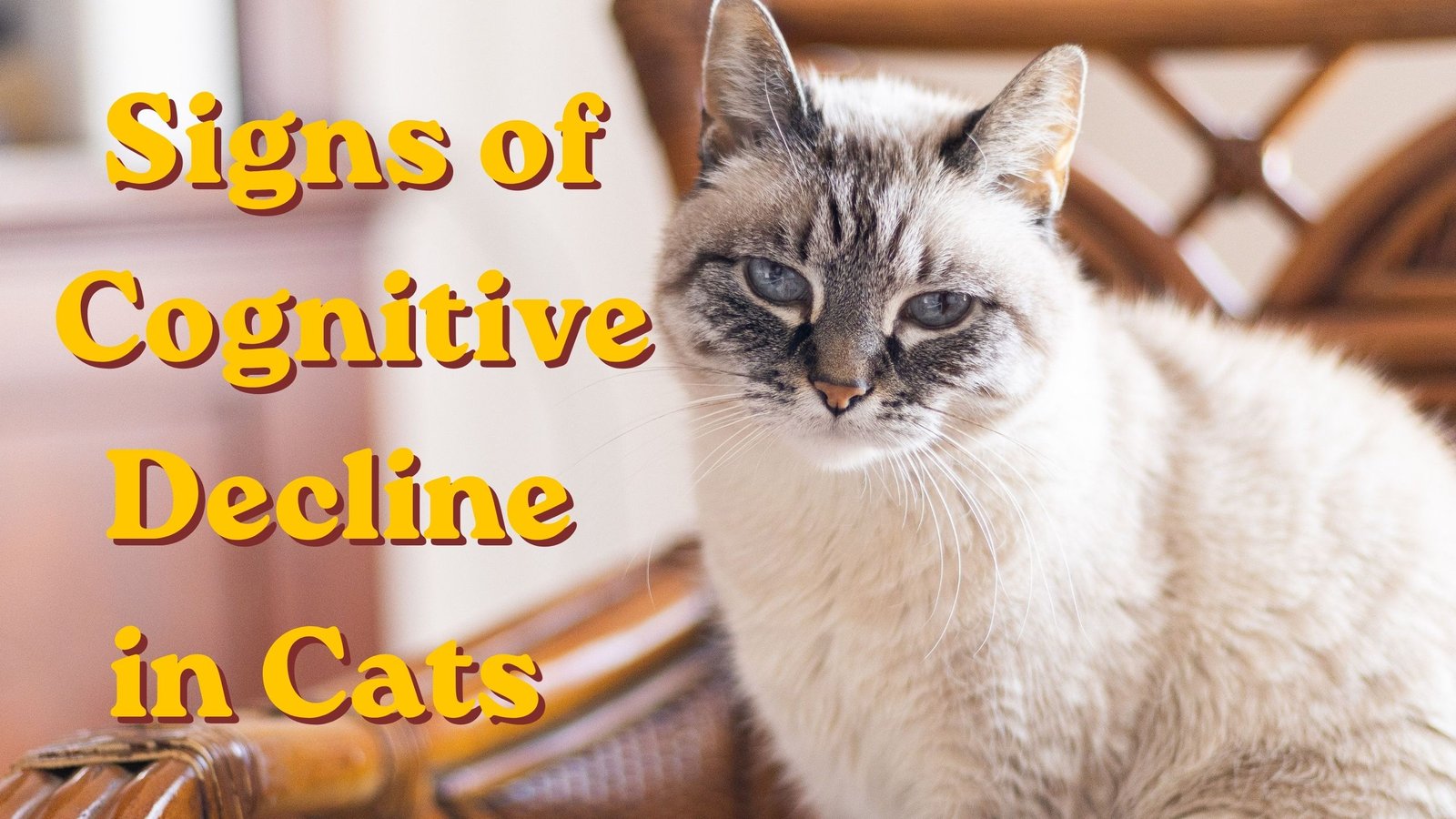
Signs of Cognitive Decline in Cats: What to Watch For and What to Do
SJSarah Johnson · Cat Behavior Advocate · 15+ years experience
Disclaimer: This article is for informational purposes only and does not replace professional veterinary advice. Cognitive decline in cats cannot be diagnosed at home. If you notice changes in your cat’s behavior, contact your veterinarian.
The first time I noticed something was off with Sophie, it was three in the morning. She was standing in the middle of the hallway, staring at the wall. Not at anything on the wall — just at the wall. I called her name and she turned slowly, like she had forgotten where she was and needed a second to remember.
She was sixteen. I told myself she was just old. But over the following months, more small things started to pile up. She yowled at night. She walked into rooms and seemed to forget why. She stood by her food bowl and cried, even though it was full.
What I was seeing, I later learned, were classic signs of cognitive decline in cats. It is the feline version of dementia, and it is far more common in senior cats than most owners realize. The problem is that the early signs are easy to miss, easy to explain away, and easy to mistake for normal aging or simple pain.
This guide is meant to change that. Here is what to watch for, how to tell cognitive decline apart from other conditions, and what you can actually do to make your cat’s life easier.
Quick Answer: The most common signs of cognitive decline in cats are nighttime vocalization, disorientation in familiar spaces, staring at walls, forgetting routines, and changes in litter box habits. These signs appear gradually and often overlap with pain, kidney disease, or hyperthyroidism — which is why a vet visit matters more than a home diagnosis.
Key Takeaways:
- Cognitive decline in cats usually starts with subtle changes, not dramatic ones.
- Nighttime yowling and staring at walls are two of the earliest and most reliable signs.
- Many symptoms of cognitive decline overlap with pain, kidney disease, and hyperthyroidism.
- Keeping a simple behavior log makes your vet visit far more productive.
- Small home adjustments — night lights, blocked stairs, consistent routines — make a big difference.
In This Article:
- What Is Feline Cognitive Dysfunction?
- The Signs of Cognitive Decline in Cats (Early to Advanced)
- Is It Dementia, Pain, or Another Illness?
- How to Document What You’re Seeing
- Making Your Home Safer for a Confused Cat
- What You Can Do to Slow the Decline
- The Part Nobody Talks About: How This Feels for You
- When to See a Veterinarian
- Frequently Asked Questions
- The Bottom Line
What Is Feline Cognitive Dysfunction?
Feline Cognitive Dysfunction (FCD) is a gradual decline in brain function that affects many cats as they age. It is not a specific disease with a single cause — it is a collection of changes in memory, learning, perception, and awareness that mirror what happens in humans with dementia.
Physically, the brains of affected cats show changes similar to those seen in Alzheimer’s patients: altered blood flow to the brain, a buildup of abnormal proteins, and a loss of neurons in areas that control memory and orientation. These changes happen slowly, which is exactly why the early signs are so easy to overlook.
Some cognitive decline is considered a normal part of aging. But when it starts affecting a cat’s ability to navigate her daily life — eating, sleeping, using the litter box, and moving around the house — that is when it crosses into a clinical problem worth addressing with your vet. The International Cat Care has a detailed clinical overview of CDS if you want to understand the underlying biology in more depth.
The Signs of Cognitive Decline in Cats (Early to Advanced)
The signs of cognitive decline tend to appear in stages. Recognizing them early gives you more room to adapt your home and your care before the changes become harder to manage.
Early Signs Most Owners Miss
The earliest signs are subtle. They often look like ordinary aging, and that is exactly why they get dismissed.
- Staring at walls or into empty space for long periods, as if seeing something that is not there.
- Standing in the middle of a room looking lost, especially in the evening.
- Hesitating at familiar thresholds — the bathroom door, the top of the stairs — as if unsure whether she is allowed to pass.
- Sleeping more during the day and wandering more at night. The sleep-wake cycle shifts before other symptoms appear.
- Going to the litter box but forgetting why she is there, sometimes walking in, pausing, and walking out.
Moderate Signs
As the decline progresses, the behavior becomes more noticeable. This is the stage where most owners start to feel genuinely concerned.
- Nighttime yowling. This is one of the most common and distressing signs. The cat wanders the house in the dark, crying for no obvious reason.
- Getting stuck in corners or behind furniture. She may walk into a space and then be unable to figure out how to reverse or turn around.
- Litter box accidents. She may miss the box, urinate next to it, or stop using it entirely.
- Decreased grooming. A once-tidy cat may stop cleaning herself, leading to a dull coat and mats.
- Change in social behavior. She may become clingy, or she may withdraw entirely. Either response can be a sign.
- Not recognizing familiar people, at least temporarily. She may look at you the way she would look at a stranger.
Advanced Signs
At this stage, the cat’s ability to function independently is significantly affected, and the focus shifts from slowing the decline to keeping her comfortable and safe.
- Disorientation during the day, not just at night. She may seem unable to find her way around rooms she knows well.
- Loss of appetite and weight loss. She may forget to eat or forget where her food is.
- Incontinence. She may urinate or defecate without realizing it or without making it to the box.
- Extreme vocalization, sometimes continuously, especially at night.
- Unresponsiveness. She may no longer respond to her name or to familiar voices.
- Walking in circles or pacing for extended periods.
Important: Many of the moderate and advanced signs overlap with other medical conditions, especially chronic pain, hyperthyroidism, and kidney disease. Do not assume cognitive decline without a vet ruling out other causes.
Is It Dementia, Pain, or Another Illness?
This is the part most articles skip, and it is the part that matters most. Cognitive decline, chronic pain, hyperthyroidism, and kidney disease produce symptoms that look almost identical on the surface. A vet cannot diagnose FCD from behavior alone — they need blood work, a physical exam, and a careful history.
The table below is a rough guide, not a diagnosis. Use it to organize what you are seeing, then bring that information to your vet.
| Symptom | More Common in FCD | More Common in Pain | More Common in Hyperthyroidism / Kidney Disease |
|---|---|---|---|
| Staring at walls | Yes | Sometimes | Rarely |
| Nighttime yowling | Yes | Sometimes (if pain worsens at night) | Yes (hyperthyroidism especially) |
| Hesitating to jump or walk | Sometimes | Yes | Sometimes (weakness) |
| Litter box accidents | Yes | Yes (pain going to the box) | Yes (urgency, increased urination) |
| Increased thirst and urination | No | No | Yes |
| Weight loss with normal appetite | Sometimes | Sometimes | Yes (hyperthyroidism) |
| Getting stuck in corners | Yes | Rarely | Rarely |
| Stiffness or limping | No | Yes | Rarely |
Two of the most common behavioral changes in senior cats are hiding more and becoming suddenly clingy. Both can point to cognitive decline, pain, or a mix of both. If your cat has started hiding more than usual, that pattern deserves its own attention. And if she has become suddenly clingy, that is another behavioral shift worth documenting for your vet.
How to Document What You’re Seeing
One of the most useful things you can do — and the thing most owners never think to do — is keep a written record of what you observe. Memory fades, patterns get lost, and vet appointments are short. A simple log changes the quality of the conversation you have with your vet.
Keep a Simple Behavior Log
You do not need anything fancy. A notes app on your phone or a small notebook is enough. For each entry, write the date, the time, and a short description of what happened. Focus on these categories:
- Nighttime activity (wandering, yowling, pacing)
- Eating and drinking (amount, times, refusals)
- Litter box use (normal, missed, accidents)
- Social behavior (hiding, clinginess, disinterest)
- Mobility (stiffness, hesitation, reluctance to jump)
- Disorientation moments (staring, getting stuck, seeming lost)
Even five entries a week gives your vet more to work with than a vague memory of “she has been acting strange lately.”
Record Short Videos
This is the single most useful thing you can do, and almost no one does it. When your cat is yowling at night, disoriented, or staring at the wall, take a fifteen-second video. Show it to your vet. Behavior that is hard to describe in words is instantly obvious on video.
Questions Your Vet Will Ask
Before your appointment, be ready to answer these:
- When did the changes start? Was it gradual or sudden?
- How often do they happen — daily, weekly, only at night?
- Has her appetite changed? Has she lost weight?
- Is she using the litter box normally?
- Has her sleep schedule changed?
- Has anything in her environment changed recently?
- Is she on any medications or supplements?
If you can answer these clearly, your vet has a much better chance of sorting out whether this is cognitive decline, pain, or something else.
Making Your Home Safer for a Confused Cat
Whether or not the diagnosis is confirmed, there is a lot you can do at home to reduce the daily risks that come with cognitive decline. Confusion is manageable when the environment does the remembering for her.
Night Lights and Navigation
Older cats with cognitive decline often get worse at night. The dark, quiet house feels unfamiliar, and they wander or yowl. Plug in a few night lights in the hallways and the rooms she uses most. Keep a soft light on near her food, water, and litter box. This small change alone stops a surprising number of nighttime episodes.
Blocking Dangerous Access (Stairs, Balconies, Windows)
A disoriented cat can walk off the top of the stairs, slip through a window screen, or get stuck on a balcony. If your cat is showing any disorientation, close doors, install baby gates at the top and bottom of the stairs, and keep windows and balcony doors secured. This is not permanent — it is a short-term safety measure that prevents serious injury.
Keeping Resources Findable (Food, Water, Litter)
Put food, water, and the litter box in places she can find without having to navigate through the house. If she has to walk from one end of the house to the other to reach the litter box, she may not make it in time.
Keep the setup consistent. Do not move her bowls or the litter box around. For a cat with cognitive decline, the location of these resources is one of the few anchors she has left.
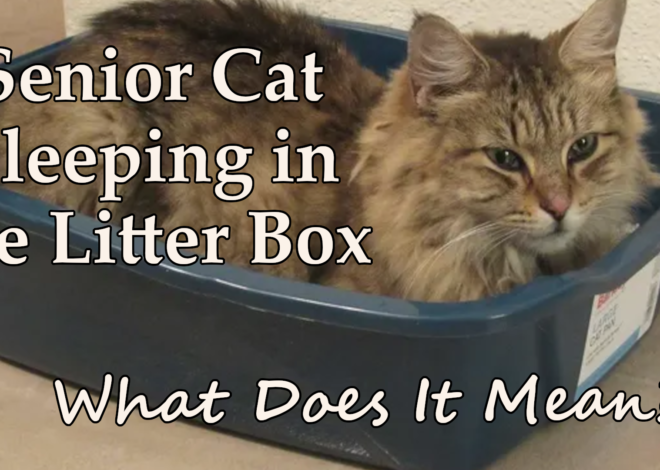
If you have already noticed her sleeping in or near the litter box, that is often a sign that finding and using the box has become difficult. Reorganizing the room so the box is more accessible can help.
What You Can Do to Slow the Decline
There is no way to reverse cognitive decline, and there is no miracle cure. But several practical steps can slow its progression and improve your cat’s quality of life.
- Keep the routine fixed. Same feeding times, same play times, same bedtime. Predictability reduces the cognitive load on a confused brain.
- Add gentle enrichment. Puzzle feeders, short wand play sessions, and food hidden in a few places encourage her to use her mind without overwhelming her.
- Talk to your vet about diet. Some senior and prescription diets include ingredients marketed to support brain health. Ask your vet whether these are appropriate for your cat.
- Discuss supplements with your vet. Certain supplements are sometimes recommended for cognitive support in cats. Never start one without veterinary guidance.
- Keep her engaged but not overloaded. Five minutes of gentle play is better than a chaotic twenty-minute session. Watch her cues and stop when she seems tired or confused.
- Do not underestimate social contact. Sitting quietly near her, speaking to her, and gentle petting all reduce stress and give her a sense of orientation.
The Part Nobody Talks About: How This Feels for You
Watching a cat you have loved for fifteen years slowly lose track of the world is hard. It is not the same as caring for a sick cat who might recover. It is the slow awareness that the cat you knew — the one who met you at the door, who knew exactly which cupboard the treats were in — is gradually fading.
There is guilt, too. You wonder whether you missed the signs earlier. Whether you could have done something different five years ago. Whether the times you got frustrated at her nighttime yowling were unfair.
I want to say something clearly, because I needed to hear it myself: you did not cause this. Cognitive decline is not something an owner can prevent. It is not a consequence of how you fed her, played with her, or loved her. It is a biological process.
What you can do — what you are doing right now by reading this article — is showing up for her as she changes. That is not nothing. It is everything. She may not remember the routines or recognize the rooms, but she still knows the feeling of your hands and the warmth of your presence. That does not fade as fast as the rest.
Be gentle with yourself the way you are being gentle with her.
When to See a Veterinarian
Book an appointment if you notice any of the following:
- Nighttime yowling or pacing that has started recently.
- Disorientation in familiar spaces.
- Staring at walls, getting stuck in corners, or looking lost.
- Litter box accidents or a sudden change in litter box habits.
- Weight loss, appetite changes, or increased drinking and urination.
- Any sudden change in behavior, even if it seems small.
Your vet will likely run blood work, check her thyroid and kidney function, examine her joints and teeth, and ask about behavior. Do not hesitate to bring your behavior log and any videos with you. The more information you provide, the more accurate the assessment will be.
If cognitive decline is confirmed, your vet can discuss management options, environmental adjustments, and what to expect as the condition progresses. If it turns out to be something else — pain, thyroid disease, kidney disease — that is also useful, because those conditions are often treatable and management can improve her quality of life significantly.
Frequently Asked Questions
What are the first signs of cognitive decline in cats?
The earliest signs are usually subtle: staring at walls, hesitating at familiar thresholds, sleeping more during the day, wandering at night, and seeming briefly disoriented in rooms she knows well.
At what age do cats start showing cognitive decline?
Signs typically appear in cats over the age of 10 or 11, and become more common as cats reach their mid-teens. Every cat is different, so age alone is not a reliable predictor.
Can cognitive decline in cats be reversed?
No. It is a progressive condition. However, environmental adjustments, routine, diet, and sometimes supplements or medications can slow the progression and improve quality of life.
How is cognitive decline different from normal aging?
Normal aging means sleeping more and playing less. Cognitive decline means losing orientation, forgetting routines, getting stuck in familiar places, or vocalizing at night. If it interferes with daily functioning, it is more than aging.
Is nighttime yowling always a sign of cognitive decline?
No. Nighttime yowling can also be caused by pain, hyperthyroidism, kidney disease, or hearing loss. This is why a vet visit is essential rather than assuming one diagnosis.
Should I let my cat hide if she seems confused?
Yes, as long as the hiding spot is safe and she is still eating, drinking, and using the litter box. Do not force her out. Make the hiding spot warm, accessible, and quiet.
Can I use a cat age calculator to know when to expect cognitive decline?
Our Cat Age Calculator shows your cat’s age in human years, which helps you understand which life stage she is in and what changes to watch for.
The Bottom Line
The signs of cognitive decline in cats rarely appear all at once. They creep in — a stare that lasts a little too long, a yowl at three in the morning, a hesitation at the top of the stairs. If you are paying attention, you will notice them long before they become obvious.
What matters now is what you do with what you see. Document it. Bring it to your vet. Adjust your home so the environment does the remembering for her. Keep her routine steady. Keep her warm, close, and safe.
Cognitive decline is not curable, and that is a hard truth to sit with. But the quality of the remaining time — her comfort, her sense of safety, her connection to you — is something you can still shape. That is the part that is in your hands.
Show up for her the way you always have. That is what she still knows, even when everything else starts to blur.
Related reading from CatParentsGuide:
Why Is My Senior Cat Hiding More?
Why Is My Senior Cat Suddenly Clingy?
Senior Cat Sleeping in the Litter Box: What Does It Mean?
How to Desensitize a Cat to Grooming
Cat Age Calculator: Convert Cat Years to Human Years
About the author: Sarah Johnson is a cat behavior advocate with over 15 years of hands-on experience helping cat owners understand and support their cats through behavioral challenges. She has worked with rescue organizations and certified feline behaviorists to develop practical, humane solutions. She is not a veterinarian. This article is for informational purposes and does not replace professional veterinary or behavioral advice.