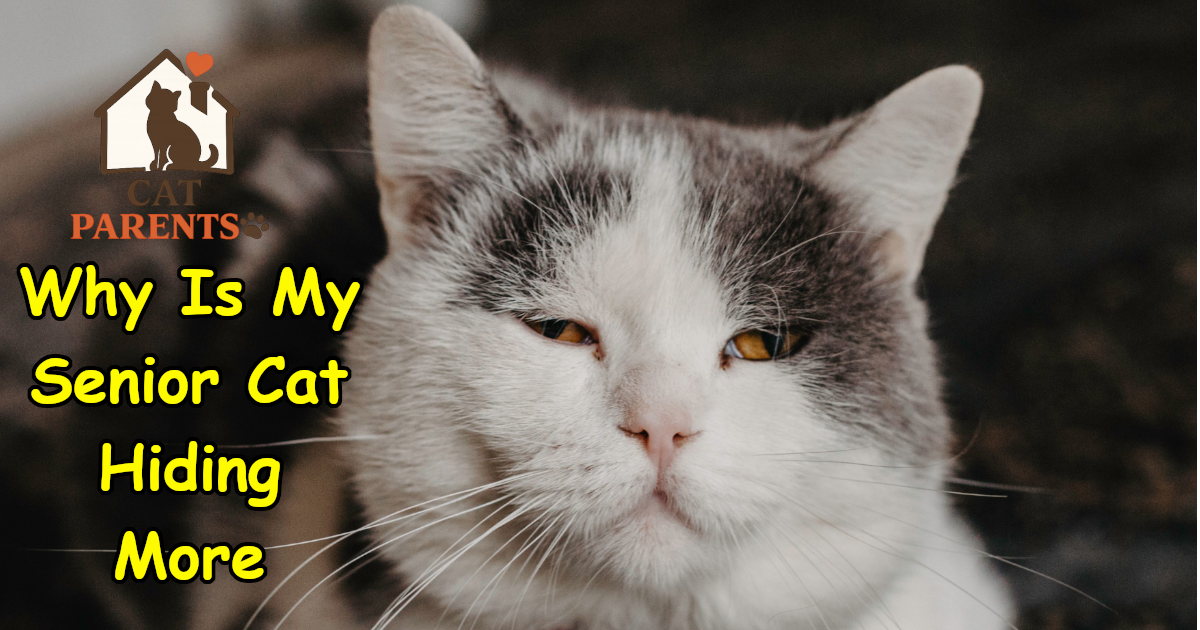
Why Is My Senior Cat Hiding More? What’s Normal and What’s Not
SJSarah Johnson · Cat Behavior Advocate · 15+ years experience
Disclaimer: This article is for informational purposes only and does not replace professional veterinary advice. Senior cats are especially vulnerable to medical conditions that can look like behavior changes. If your cat shows sudden changes in behavior, contact your veterinarian.
My cat Sophie used to sleep on the back of the sofa, right in the middle of everything. She would watch us eat dinner, bat at the dog’s tail when he walked past, and demand attention every evening around nine o’clock. She was part of the household in every sense.
When she turned fifteen, that started to change. She found a spot under the bed and stayed there more and more. Then it was the back of the closet. Then behind the bookshelf. She was not sick as far as I could tell. She was eating, using the litter box, and still affectionate when I went to her. But she was hiding more than she ever had before, and I did not understand why.
If you have noticed your senior cat hiding more, you are probably asking the same questions I was. Is this normal aging? Is something wrong? Should I be worried, or am I overreacting? The answer is somewhere in between. Some hiding in older cats is a natural part of aging. Some of it is a warning sign that something needs attention.
This guide will help you tell the difference.
Quick Answer: Senior cats hide more for a range of reasons — cognitive decline, chronic pain, vision or hearing loss, instinctive fear of vulnerability, or simply a growing preference for quiet. Some hiding is normal. But hiding that appears suddenly, gets progressively worse, or comes with other changes (appetite, weight, mobility) needs a vet visit.
Key Takeaways:
- Hiding is a common senior cat behavior, but the reason matters.
- Pain and cognitive decline are the two most overlooked causes.
- Senior cats may hide instinctively because moving slowly makes them feel vulnerable.
- Accessible hiding spots and a predictable routine make a real difference.
- If the hiding is new, sudden, or worsening, see your vet.
In This Article:
- Why Older Cats Hide More Than They Used To
- Is It Aging, Illness, or Something Else?
- Signs the Hiding Needs a Vet Visit
- How to Make Her Feel Safe Again
- When Hiding Combines With Other Changes
- When to See a Veterinarian
- Frequently Asked Questions
- The Bottom Line
Why Is My Senior Cat Hiding More Than Usual?
There is no single reason a senior cat starts spending more time in closets and under beds. In most cases, it is a combination of physical, cognitive, and emotional factors that build up gradually. Here are the ones I see most often.
Cognitive Decline and Disorientation
Feline Cognitive Dysfunction — the cat version of dementia — affects a significant portion of cats over the age of 11. One of its earliest signs is a cat who seems unsure of her surroundings, gets stuck in corners, or retreats to small, enclosed spaces where she feels contained.
Hiding becomes a coping mechanism. When the world is confusing, a dark, enclosed spot feels manageable. She is not hiding from you. She is hiding from a reality that has stopped making sense.
Pain — The Most Overlooked Cause
This is the one I wish more owners knew about. Cats in pain hide. It is instinctive. In the wild, a cat who shows weakness becomes a target, so cats have evolved to mask pain by going still and disappearing.
Arthritis, dental disease, and internal issues like kidney problems are all common in older cats, and all of them can trigger increased hiding. If your cat used to be social and has started spending most of her time alone in a quiet spot, pain should be near the top of your list. The Cornell Feline Health Center’s overview of arthritis in cats is a good place to start if you want to understand how common and how subtle feline pain can be.
Vision or Hearing Loss
When the world gets blurrier or quieter, cats lose confidence. Your senior cat may still hear you, but not know exactly where you are. She may see shapes but not recognize them. Hiding is a way of reducing the number of unpredictable things she has to process. A quiet, familiar spot becomes a sanctuary instead of just a resting place.
Fear of Being “Caught” Moving Slowly (Predator Instinct)
This is the angle most articles miss, and it is one of the most powerful. Older cats move slower. Their reflexes are not what they used to be. And somewhere in their ancient wiring, that slowness registers as vulnerability.
You may have noticed your senior cat hesitating before crossing an open room, or preferring to walk along walls instead of through the middle of the floor. That is the predator instinct at work. She is not just tired. She is avoiding being seen in a state of weakness. Hiding, for her, is not antisocial — it is self-protective.
Understanding this changes how you respond. Instead of trying to coax her out into the open, you can help by making her hiding spots more comfortable and accessible. Let her feel safe rather than exposed.
Simple Preference for Quiet as Cats Age
Not every reason is medical. Older cats genuinely prefer less stimulation. Where a young cat might enjoy chaos, a senior cat wants calm. The household noise, the coming and going, the sudden movements of children or other pets — all of it can become overwhelming.
If your senior cat is hiding more but is otherwise healthy, eating well, and affectionate when you come to her, she may just be choosing peace over noise. That is not a problem. It is a preference.
Is It Aging, Illness, or Something Else?
This is the question I get most from worried cat owners, and I always answer it the same way: it depends on whether the hiding is isolated or part of a larger pattern.
If the only change is that she spends more time in quiet spots, and everything else is normal — appetite, litter box habits, mobility, and affection — this is likely normal aging. Watchful waiting is reasonable.
If anything else has changed, even something small, that shifts the picture. I have written about a closely related situation in senior cats who start sleeping in the litter box. That behavior and increased hiding share the same underlying causes — pain, confusion, or a search for safety. Both deserve the same response: pay attention, and call your vet if you are unsure.
Signs the Hiding Needs a Vet Visit
If your senior cat is hiding more AND any of the following is true, book an appointment.
- Weight loss: Even a small drop matters in older cats.
- Appetite changes: Eating less, refusing food, or eating much more than usual.
- Mobility issues: Hesitating to jump, walking stiffly, or avoiding stairs.
- Vocalization: Yowling at night or crying in her hiding spot.
- Litter box changes: Accidents outside the box, straining, or going much more often.
- Disorientation: Staring at walls, getting stuck in corners, or seeming confused about familiar spaces.
- Grooming decline: A dull coat or mats she used to keep clean.
- Withdrawal from affection: She no longer wants to be touched, even by you.
Important: Hiding that appears suddenly — especially in a cat who has never done this before — is a medical symptom until proven otherwise. Do not wait weeks to see if it improves.
How to Make Her Feel Safe Again
Whether the cause is medical, cognitive, or emotional, there is a lot you can do at home to make your cat’s world feel safer.
Create Accessible Hiding Spots (Not Just Under Furniture)
If your cat is hiding, do not fight it. Make it easier. Buy a covered cat bed or place a soft blanket inside a cardboard box. Put it in a corner she already likes. Give her somewhere to hide that does not require crawling under heavy furniture or squeezing behind tight spaces.
Then leave it alone. Let her choose it on her own terms. Do not pull her out to “socialize.” For a senior cat, a comfortable hiding spot that is easy to reach is one of the kindest things you can provide.
Reduce Household Stressors
Loud noises, sudden movements, young children, and unfamiliar visitors all take a bigger toll on older cats than they used to. Keep the environment calm. Turn down the television. Give her a room she can retreat to without being disturbed. If you have other pets, make sure she has a way to eat, drink, and use the litter box without having to interact with them.
Check In Gently, Without Forcing Interaction
Sit near her hiding spot and speak softly. Do not reach in. Do not pull her out. Let her decide whether to come to you. Sometimes she will. Sometimes she will stay put. Both are fine.
The goal is not to make her social again. The goal is to be a calm, reliable presence so she knows she is not alone, even when she is hiding.
Warm, Low-Access Resting Areas
Arthritic cats seek warmth. Place heated beds or soft blankets in low, easy-to-reach areas. Avoid spots that require jumping. If she has a favorite hiding place, put a warm bed there instead of forcing her into a new one. Meet her where she already is.
When Hiding Combines With Other Changes
Senior cats rarely show just one symptom. Hiding often appears alongside other shifts in behavior, and the combination can tell you a lot about what is going on.
It is interesting to compare hiding with the opposite behavior. Some senior cats become suddenly clingy rather than withdrawn. Both behaviors can come from the same underlying causes — pain, cognitive decline, or a need for safety — but the cat responds differently based on her personality and how she processes stress.
If your cat is hiding AND vocalizing, she may be in pain or confused. If she is hiding AND not eating, that is an urgent concern. If she is hiding AND having litter box accidents, that often points to a medical issue rather than simple preference.
If your senior cat is also showing signs of pain or resistance during grooming, our article on how to desensitize a cat to grooming explains how to rebuild trust slowly and gently, which matters even more in aging cats.
When to See a Veterinarian
Book an appointment if any of the following applies:
- The hiding started suddenly or has gotten noticeably worse in a short period.
- It comes with any of the medical signs listed above.
- Your cat seems confused, disoriented, or is vocalizing at night.
- She has stopped eating, lost weight, or is drinking much more than usual.
- She no longer comes out for food or affection, even when you go to her.
- You feel something is wrong. Trust that instinct.
Your vet will likely run blood work, check her thyroid and kidney function, examine her joints, and ask about behavior changes. Be specific. Tell them when the hiding started, how often it happens, and what has changed. Senior cats hide symptoms well, and the details you provide often make the diagnosis.
Frequently Asked Questions
Is it normal for a senior cat to hide more?
Some increased hiding is normal. Older cats prefer quiet and lower stimulation. But if the hiding is new, worsening, or comes with other changes, it is worth investigating.
Can pain make my cat hide more?
Yes. Pain is one of the most overlooked causes of hiding in senior cats. Cats are wired to hide weakness, so a cat in pain often disappears rather than showing obvious signs.
Is hiding a sign of dementia in cats?
It can be. Feline Cognitive Dysfunction often causes disorientation, and hiding is a common way cats cope with a world that has become confusing.
Should I pull my cat out of her hiding spot?
No. Forcing her out increases stress and damages trust. Sit near her, speak softly, and let her come out on her own. If you are worried she is not eating or drinking, call your vet.
Why does my senior cat hide from me specifically?
If she is hiding from you but not from other people, it may be that you are the one who handles her for grooming, nail trims, or vet visits. She may associate you with those stressful events. Try spending time near her without doing anything, and let her rebuild trust on her own terms.
How can I tell if hiding is normal aging or something serious?
Look at the whole picture. If she is eating, using the litter box normally, and still affectionate when you go to her, it may be aging-related. If anything else has changed — appetite, weight, mobility, vocalization — see your vet.
Can I use the cat age calculator to know if my cat is officially senior?
Yes. Our Cat Age Calculator will show your cat’s age in human years, which helps you understand which life stage she is in and what health considerations apply.
The Bottom Line
A senior cat hiding more is not automatically a crisis, but it deserves your attention. Older cats slow down. They seek quiet. They prefer spaces that feel contained and safe. Some of that is simply aging, and there is nothing wrong with letting her have it.
A senior cat hiding more is not automatically a crisis. Older cats slow down. They seek quiet. They prefer spaces that feel contained and safe. Some of that is simply aging, and there is nothing wrong with letting her have it.
But hiding is also one of the most common ways senior cats communicate that something is not right. Pain, cognitive decline, vision loss, and hearing loss all show up first as withdrawal. The cat is not being antisocial. She is telling you that her world has changed.
Your job is to notice the difference between preference and problem, to make her environment easier to navigate, and to bring in a vet when the hiding is sudden, worsening, or comes with other changes.
A senior cat who hides more is not distancing herself from you. She is adapting to a body and a world that are not what they used to be. Meet her where she is, make her hiding spots warm and safe, and stay near enough that she knows you are still there.
Related reading from CatParentsGuide:
Why Is My Senior Cat Suddenly Clingy?
Senior Cat Sleeping in the Litter Box: What Does It Mean?
Why Does My Cat Hide After a Bath?
How to Desensitize a Cat to Grooming
Cat Age Calculator: Convert Cat Years to Human Years
About the author: Sarah Johnson is a cat behavior advocate with over 15 years of hands-on experience helping cat owners understand and support their cats through behavioral challenges. She has worked with rescue organizations and certified feline behaviorists to develop practical, humane solutions. She is not a veterinarian. This article is for informational purposes and does not replace professional veterinary or behavioral advice.