Why Are Cats Clingy After a Bath? The Real Reasons Explained
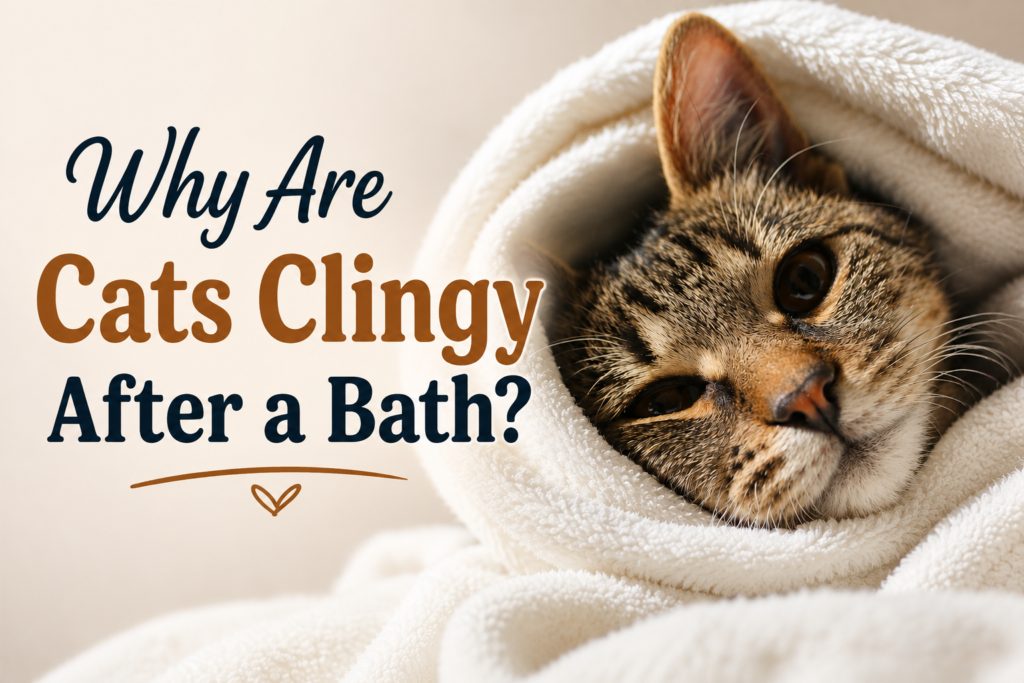
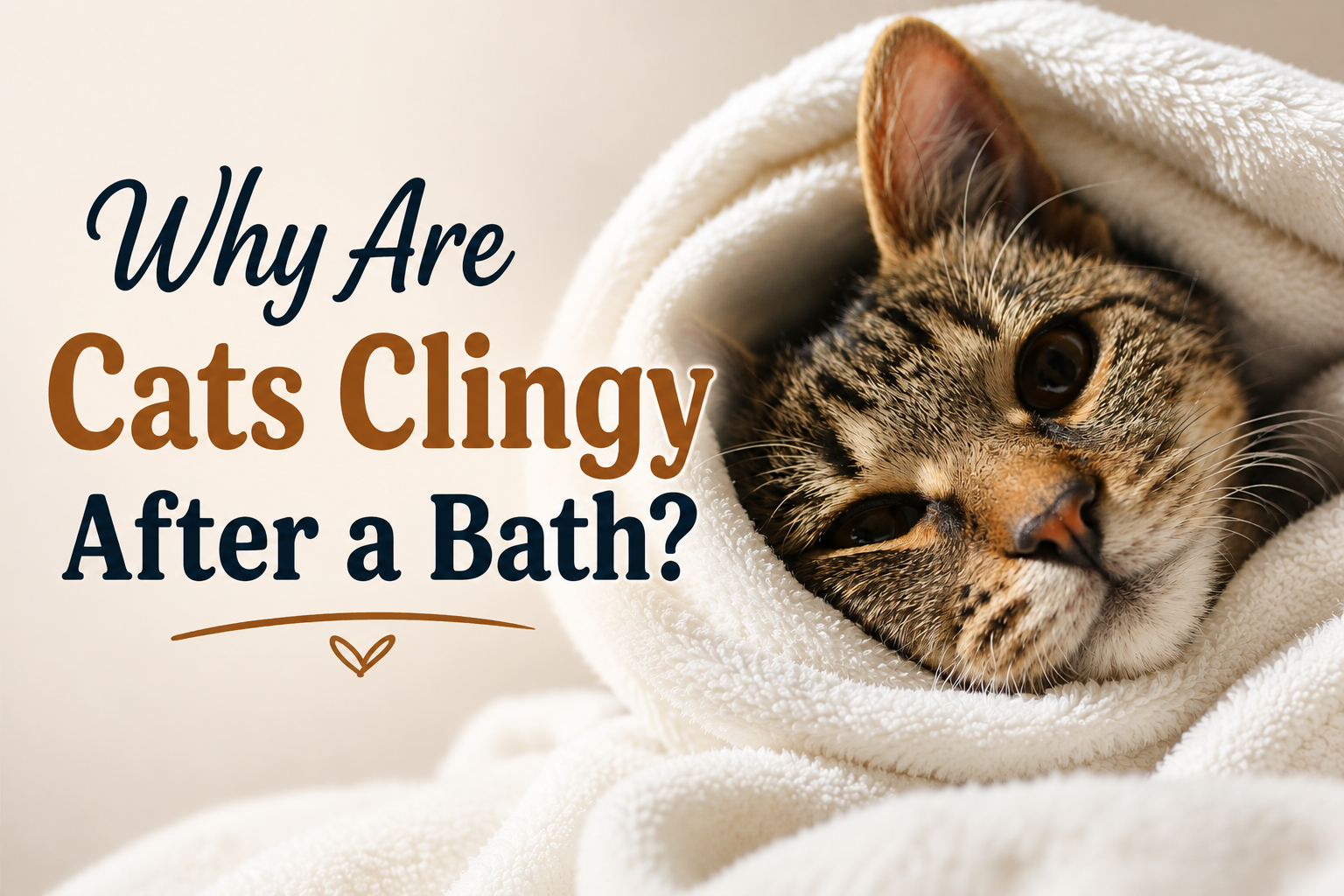
You just finished bathing your cat. You were gentle, kept it short, and used warm water. You expected your cat to hide under the bed — but instead, she is following you everywhere. She is rubbing against your legs, meowing, and won’t leave your side.
This behavior can be confusing. Is she scared? Is she angry? Or is she trying to tell you something else?
The short answer is: your cat is seeking comfort and reassurance after a stressful experience. Clinginess after a bath is a common stress response, just like hiding — but it looks different because every cat copes in their own way.
- Clinginess is a normal stress response — some cats seek comfort instead of hiding.
- Loss of familiar scent and feeling vulnerable are the main drivers.
- Personality plays a big role: some cats are naturally more dependent on their owners.
- Never punish clingy behavior — it will increase anxiety and damage trust.
- If your cat hides instead, that’s also normal. Read our guide on Why Does My Cat Hide After a Bath? for more.
Why Do Cats Get Clingy After a Bath?
There are several reasons why your cat might become extra affectionate or needy after a bath. Understanding these reasons helps you respond appropriately and reduce your cat’s stress in the future.
1. Loss of Familiar Scent
Cats rely heavily on their sense of smell to feel secure. Their scent is their identity. When you bathe your cat, you strip away their natural oils and familiar smell, replacing it with the scent of shampoo and water.
This sudden change can be disorienting. Your cat may feel like she has lost part of herself. By rubbing against you, she is trying to regain a familiar scent — yours. She is also transferring her scent back onto you, which is a way of saying “you are mine, and I am safe with you.”
2. Feeling Vulnerable and Overwhelmed
A bath is a physically and emotionally intense experience. Your cat is handled, restrained, and subjected to water — all things that trigger her natural fight-or-flight response.
After the bath, her adrenaline levels are still elevated. She may feel weak, cold, or disoriented. In this state, she instinctively seeks the presence of someone she trusts. You are her safe person. Being close to you helps her regulate her emotions and feel protected.
3. Seeking Reassurance
Some cats are more socially dependent than others. When they experience something scary, they look to their owner for reassurance. This is called “social buffering” — the presence of a trusted companion reduces stress.
If your cat is clinging to you after a bath, she is essentially saying: “That was scary. Please make me feel safe again.” She is not being needy in a demanding way. She is asking for comfort in the only way she knows how.
4. Personality Differences
Just like humans, cats have different personalities. Some are naturally more confident and independent. Others are more sensitive and reliant on their owners.
A cat who is already prone to anxiety or who has a strong bond with you is more likely to become clingy after a stressful event. A more independent cat might prefer to retreat and self-soothe.
There is no right or wrong response. Both clinginess and hiding are normal stress responses.
Clingy vs Hiding: Why Some Cats Seek Comfort While Others Withdraw
You might be wondering: why does my cat want to be near me, while my friend’s cat hides under the bed after a bath?
The answer lies in your cat’s personality, past experiences, and the level of stress during the bath.
Why some cats become clingy:
- They have a strong attachment to you.
- They are naturally more social or dependent.
- They find comfort in your presence and scent.
- They may have had positive experiences with you after previous stressful events.
Why some cats hide:
- They are more independent or self-reliant.
- They feel overwhelmed and need quiet to recover.
- They may have had negative experiences with handling in the past.
- They prefer to self-soothe in a familiar, enclosed space.
Both responses are valid. Neither means your cat hates you or trusts you less. It simply means your cat has her own way of coping.
How to Handle a Clingy Cat After a Bath
If your cat is following you around, rubbing against you, or meowing for attention, here is how to respond in a way that helps her recover.
1. Offer Gentle Reassurance
Speak in a calm, soft voice. Pet her gently if she seeks contact. Do not force affection if she seems overwhelmed, but do not push her away either. Let her set the pace.
2. Provide a Warm, Comfortable Space
Even if she wants to be near you, make sure she has a warm, cozy spot nearby. A soft blanket or towel on the sofa next to you can be a good compromise. She can be close without feeling like she has to be in your lap.
3. Offer a High-Value Treat
A small, special treat can help shift her focus from stress to something positive. It also reinforces the idea that after a bath, good things happen. This is a form of counter-conditioning that can make future baths less stressful.
4. Let Her Initiate Contact
Do not chase her or pick her up if she is not asking for it. Let her come to you. This gives her control over the interaction and helps her feel more secure.
5. Keep the Environment Calm
Minimize loud noises, sudden movements, and other stressors. Turn off the TV or radio. If you have other pets, keep them in another room for a while. A calm environment helps your cat’s nervous system settle.
6. Do Not Punish or Ignore Her
Punishing a clingy cat for seeking comfort will only increase her anxiety. Ignoring her completely might make her feel abandoned. The balance is to be present, calm, and responsive without overwhelming her.
When to Worry: Signs of Real Distress
Clinginess after a bath is usually temporary and harmless. However, if it continues for more than a day or is accompanied by other signs, it could indicate a deeper issue.
Watch for these red flags:
- Clinginess lasts more than 24 hours without improvement
- Your cat is not eating or drinking
- Your cat is hiding and refusing to come out (different from being clingy)
- Your cat is shaking, panting, or showing other signs of distress
- Your cat is vomiting, has diarrhea, or seems lethargic
- Your cat is unusually aggressive or vocal
Frequently Asked Questions
Cats become clingy after a bath because they feel vulnerable, disoriented from losing their familiar scent, and seek reassurance from their owner. It is a natural stress response, not a sign of weakness.
Yes, it is a common stress response in cats. Some cats seek comfort after a stressful experience, while others prefer to hide. Both are normal reactions.
Yes. Offer gentle affection, speak calmly, and let your cat initiate contact. Avoid overwhelming them with too much attention, but provide reassurance if they seek it.
Hiding is another common stress response. Some cats feel safer withdrawing to a quiet space to recover. Personality, past experiences, and the level of stress during the bath all influence which response your cat shows.
Most cats return to normal within a few hours. If clinginess continues for more than a day or is accompanied by other symptoms like lethargy or loss of appetite, contact your veterinarian.
You can reduce the stress of bathing by using warm water, keeping the session short, drying your cat thoroughly, and rewarding them with treats afterward. A calmer bath experience often leads to less clingy behavior.
The Bottom Line
Clinginess after a bath is your cat’s way of saying “I need you.” It is not manipulation, not anger, and not a sign of weakness. It is a natural stress response driven by a loss of familiar scent, physical vulnerability, and a need for reassurance.
Respond with patience, gentleness, and consistency. Let your cat lead the interaction. Offer comfort without forcing it. And remember — if your cat prefers to hide instead, that is equally normal.
Understanding your cat’s unique coping style is the foundation of a strong, trusting relationship. Whether she clings or hides, she is telling you the same thing: “That was scary. Help me feel safe again.”
About the author: Sarah Johnson is a cat behavior advocate with over 15 years of hands-on experience helping cat owners understand and support their cats through behavioral challenges. She has worked with rescue organizations and certified feline behaviorists to develop practical, humane solutions. She is not a veterinarian. This article is for informational purposes and does not replace professional veterinary or behavioral advice.