Cat Acting Strange After a Bath? What’s Normal and What’s Not
This article is informational only and does not replace veterinary advice. If your cat seems unwell, contact your veterinarian.
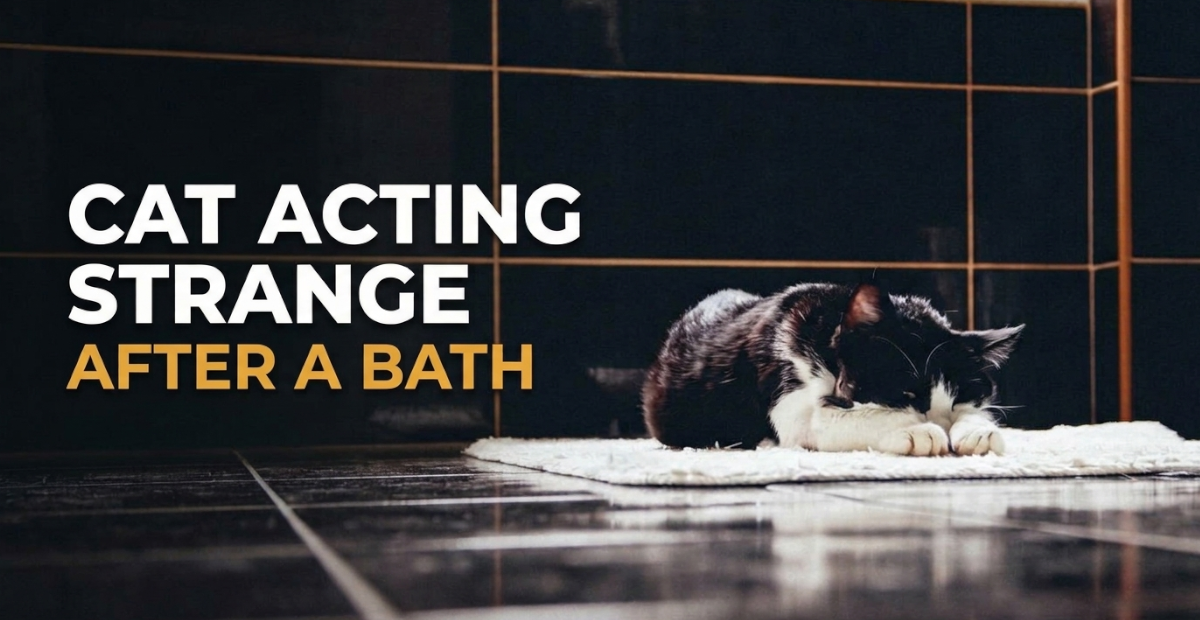
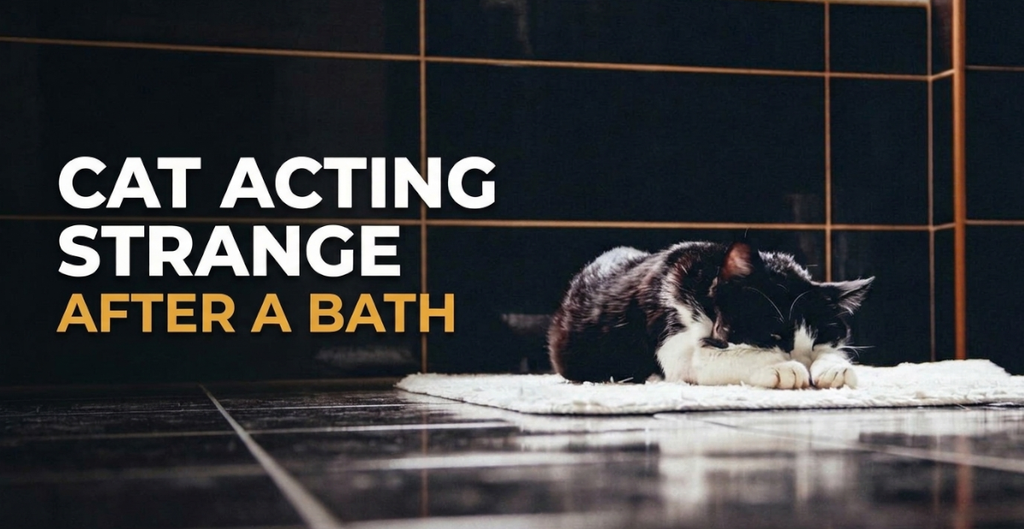
You set her down on the towel and she bolts. Maybe she’s under the bed now, or pressed so hard against your ankle that you can barely walk, or hissing at the cat she has lived with peacefully for years. A cat acting strange after a bath is one of the most common worries cat owners bring up, and it almost always has a plain, explainable cause.
A bath takes away the smell she uses to read her world, soaks her fur, and puts her in a slippery tub she did not choose to enter. That combination is enough to change how she behaves for a while. Most of what you see afterward is a stress response winding down, not evidence that something went wrong during the bath.
A few behaviors do need a call to your vet, though, and it helps to know which ones. This guide covers what owners see most often, what each behavior usually means, and where to go next if you want detail on one specific reaction.
The short answer: most mild changes after a bath are normal. Hiding, clinginess, shivering, heavy licking, a burst of energy, or a grumpy reaction to a housemate all have identifiable causes, usually scent loss and stress. A smaller set of signs needs a vet: refusing food or water, lethargy, labored breathing, vomiting, skin redness or hair loss, or a behavior change that lasts or gets worse.
- Cats rely heavily on scent to feel secure. A bath removes their familiar smell and leaves shampoo behind.
- Hissing or growling between housemates after a bath is believed to be scent-based and usually settles once both cats smell like themselves again.
- Shivering is often from stress or cold wet fur, and usually eases once she is warm and dry.
- Heavy licking afterward is common grooming behavior. Rinse shampoo thoroughly so she isn’t licking residue off her coat.
- Call your vet for appetite loss, lethargy, breathing trouble, vomiting, skin problems, or any behavior change that doesn’t resolve.
What’s in this guide
- Why a bath changes how your cat behaves
- What you’re seeing and what it usually means
- Signs that need a vet
- How to help her in the first few hours
- Does your cat need a bath at all?
- Frequently asked questions
- The bottom line
Why a bath changes how your cat behaves
Cats lean on smell more than most owners realize. Scent is how they recognize the other animals in the house, and how familiar a room feels. A bath strips that layer away and replaces it with shampoo. When she loses her familiar scent, a cat can seem like a different animal for a while: jumpy, needy, withdrawn, or oddly hostile toward a cat she normally sleeps beside.
Stress is the second piece. Even a calm bath involves being picked up, held, wetted, and kept in a place she cannot leave. Cats are animals who like to be in control of their own movement, and a bath removes nearly all of that at once. The handling matters as much as the water.
Cold is the third. Wet fur holds water against the skin and loses the insulation that normally keeps her warm. Many cats shiver after a bath for that reason alone, particularly in a house with air conditioning running.
Some cats absorb all of this and simply disappear under the bed for a while. Others react more visibly, and it can look alarming if you haven’t seen it before.
What you’re seeing and what it usually means
The table below covers the most common versions of a cat acting strange after a bath. Read the middle column first. It tells you what is probably going on. The last two columns help you decide whether to wait, read more, or call your vet.
Common reactions when your cat is acting strange after a bath
| What you see | What it usually means | When to worry | Read more |
|---|---|---|---|
| Hiding under furniture or in a closet | She feels exposed. Her own scent is gone and the house smells unfamiliar, so she picks a small, covered space until she feels safe again. | Hiding that doesn’t ease, or that comes with not eating or drinking | Hiding after a bath |
| Following you from room to room, or suddenly clingy | Some cats seek safety in the person who handled them. It’s often a comfort-seeking response to feeling off balance. | Clinginess that goes on and on, or arrives with other changes in appetite or litter box habits | Clingy after a bath |
| Hissing or growling at a housemate | Believed to be scent-based non-recognition aggression. The other cat smells wrong, so she reacts as if to a stranger. | Actual physical fighting, or tension between them that doesn’t settle | Hissing at another cat after a bath |
| Excessive licking | Usually normal grooming. She is putting her own scent back on her coat and settling her fur. | Licking that continues beyond a day or two, or looks like itching, redness or hair loss | |
| Shaking or shivering | Stress, cold wet fur, or both at once. | Shivering that continues even after she is dry and warm | |
| A short burst of energy, racing around | Commonly reported by owners after baths. Research on why is limited, so treat it as a reaction rather than a fixed rule. | Panting, or activity that doesn’t wind down | |
| Growling at you, or staying distant | She may be unhappy about the handling, or she may be in discomfort or pain. | Any sign of pain, or a change in how she acts toward you that lasts | |
| Refusing food or water | Stress can dull appetite briefly, especially right after the bath. | Not eating or drinking, or refusing with vomiting or lethargy |
Signs that need a vet
Most post-bath oddness is behavioral. Some signs are not, and those are worth a phone call rather than a wait-and-see approach.
Call your veterinarian if your cat shows any of these after a bath:
- Refusing food or water
- Lethargy or unusual weakness
- Labored or rapid breathing
- Vomiting
- Redness, hair loss, or constant itching of the skin
- A behavior change that lasts or gets worse
Also mention the bath itself when you call. In older cats, a lasting change in behavior can have medical causes, and it’s worth reading about why senior cats sometimes hide more so you know what to describe to your vet.
How to help her in the first few hours
A cat acting strange after a bath usually settles faster with a few simple moves. None of them require coaxing her into anything.
Dry her gently. Use a warm towel and pat rather than rub. If she’ll tolerate more, a second dry towel helps lift moisture out of the undercoat. Skip the hairdryer unless she is already used to the sound, since the noise can add stress.
Give her a warm, quiet room. A blanket, a warm spot away from drafts, and a door she can retreat behind. Cats often want to be left alone while they dry, and letting that happen is usually the fastest route back to normal.
Don’t force interaction. If she follows you, let her. If she hides, let her. Picking her up to check on her repeatedly tends to restart the stress cycle.
Separate the cats for a few hours. If there’s tension with a housemate, keep them apart until both are calm and your wet cat is dry. Vets often suggest this for scent-based hissing at another cat after a bath, and pheromone products are sometimes suggested as an extra measure. It can take anywhere from a few hours to a few weeks to fully settle.
Offer water and a small meal. Put them where she’s resting rather than expecting her to come to the kitchen.
Check for shampoo residue. If her coat still feels tacky or smells strongly of product, she’ll spend the next while licking it off. Rinse thoroughly at bath time, and if she is already dry, a damp cloth can lift some residue.
Keep the house quiet. Skip visitors, vacuuming and loud play for the rest of the day. If your cat is generally anxious about handling, the methods in our guide to keeping a cat calm during grooming are worth having ready before the next bath.
Does your cat need a bath at all?
Often, no. Cats are efficient self-groomers, and Texas A&M’s veterinary school notes that owners generally do not need to bathe cats. That’s worth keeping in mind if every bath leaves your cat rattled for the rest of the day.
There are exceptions. A cat who can’t reach parts of her body because of obesity or arthritis may need help staying clean. A vet may also recommend bathing as part of managing a skin condition. Changes in grooming habits can themselves point to obesity, arthritis, or another medical issue, so a sudden shift in how much she cleans herself is a reason to check in with your vet rather than reach for the shampoo.
If bathing is genuinely necessary and your cat finds it hard, you can work on making handling less frightening over time. Our guide to desensitizing a cat to grooming walks through the gradual approach. It also helps to know the signs a cat is stressed during grooming and when to stop, so a session doesn’t tip into a bad experience.
Frequently asked questions
Is it normal for my cat to act strange after a bath?
Yes, in most cases. A bath removes the scent your cat relies on, leaves her wet and cold, and puts her through a stressful handling session. Hiding, clinginess, shivering, heavy licking and a short burst of energy are all commonly reported. What matters is whether the behavior settles as she dries and warms up.
How long will my cat act strange after a bath?
It usually passes as she dries, warms up and her scent returns. Some cats are back to normal quickly, while others stay jumpy for a while longer, and tension between housemates can take longer to settle. If the behavior continues or gets worse, have her seen by a vet.
Why is my cat shaking after a bath?
Usually stress, cold wet fur, or both. Offer a warm towel, a blanket and a warm room, and let her settle somewhere quiet. If she keeps shivering once she is dry and warm, call your vet.
Should I bathe my cat at all?
Usually no. Cats groom themselves well, and Texas A&M’s veterinary school notes that owners generally do not need to bathe cats. Baths are sometimes needed for a medical reason, a skin condition, or a cat who cannot groom herself. Ask your vet before making it routine.
Why is my cat licking herself so much after a bath?
She is usually restoring her own scent and settling her fur. Make sure the shampoo was rinsed thoroughly, because residue gets licked off. If the licking continues past a day or two, or looks like itching, have your vet check her skin.
When should I call the vet after my cat’s bath?
Call if she refuses food or water, seems lethargic, breathes heavily, vomits, or has redness, hair loss or constant itching. Also call if a behavior change lasts or gets worse, or if she seems to be in pain.
The bottom line
If your cat is acting strange after a bath, look at what she’s doing rather than how dramatic it seems. Hiding, clinginess, shivering, licking and grumpiness toward a housemate are ordinary reactions to losing her scent, getting cold and being handled. Give her warmth, quiet and time, and keep the other cats separate until everyone is calm. Call your vet for appetite loss, lethargy, breathing trouble, vomiting, skin problems, or a change that doesn’t pass.
Related reading from CatParentsGuide
- Why Does My Cat Hide After a Bath?
- Why Are Cats Clingy After a Bath?
- Cat Hissing at Other Cat After a Bath
- How to Desensitize a Cat to Grooming
- How to Keep Your Cat Calm During Grooming: 12 Proven Methods
- 7 Signs Your Cat Is Stressed During Grooming and When to Stop
Informational only, based on veterinary sources, and not a substitute for veterinary advice.

One thought on “Cat Acting Strange After a Bath? What’s Normal and What’s Not”