7 Signs Your Cat Is Stressed During Grooming (And When to Stop)
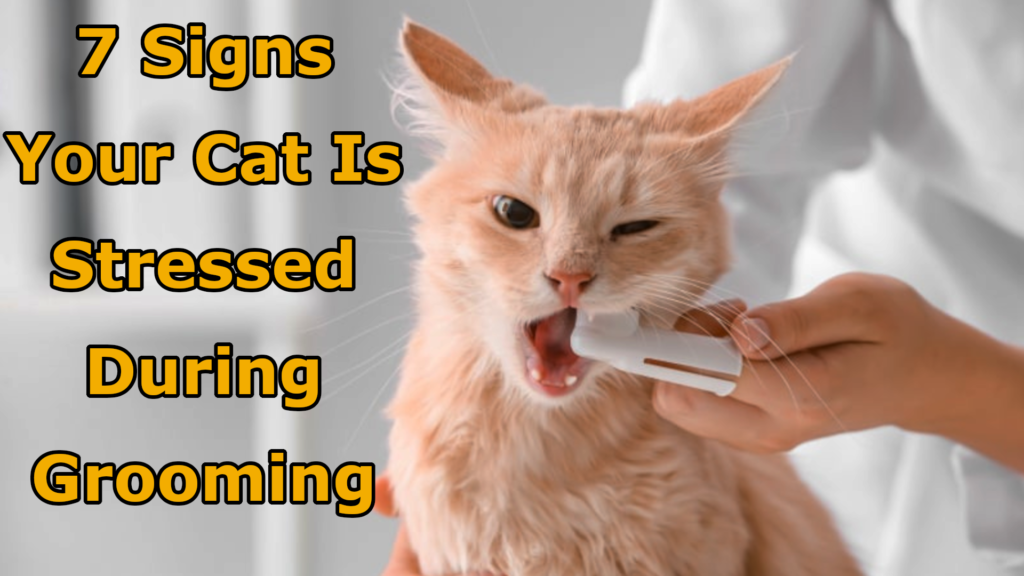
By the CatParentsGuide editorial team · Based on veterinary sources
This article is informational only and does not replace veterinary advice. If your cat seems unwell, contact your veterinarian.
You are brushing your cat. Everything seems fine. Then suddenly, she whips around and hisses at you. You freeze, confused. What went wrong? The truth is that your cat stressed during grooming was sending you warning signals for minutes before that hiss. You just did not know how to read them.
Learning to recognize the early signs of stress during grooming is the most important skill a cat owner can develop. It prevents scratches, protects your cat’s mental health, and strengthens your bond.
This guide shows the seven most common signs that a cat stressed during grooming will show, when to stop, and how to calm her down.
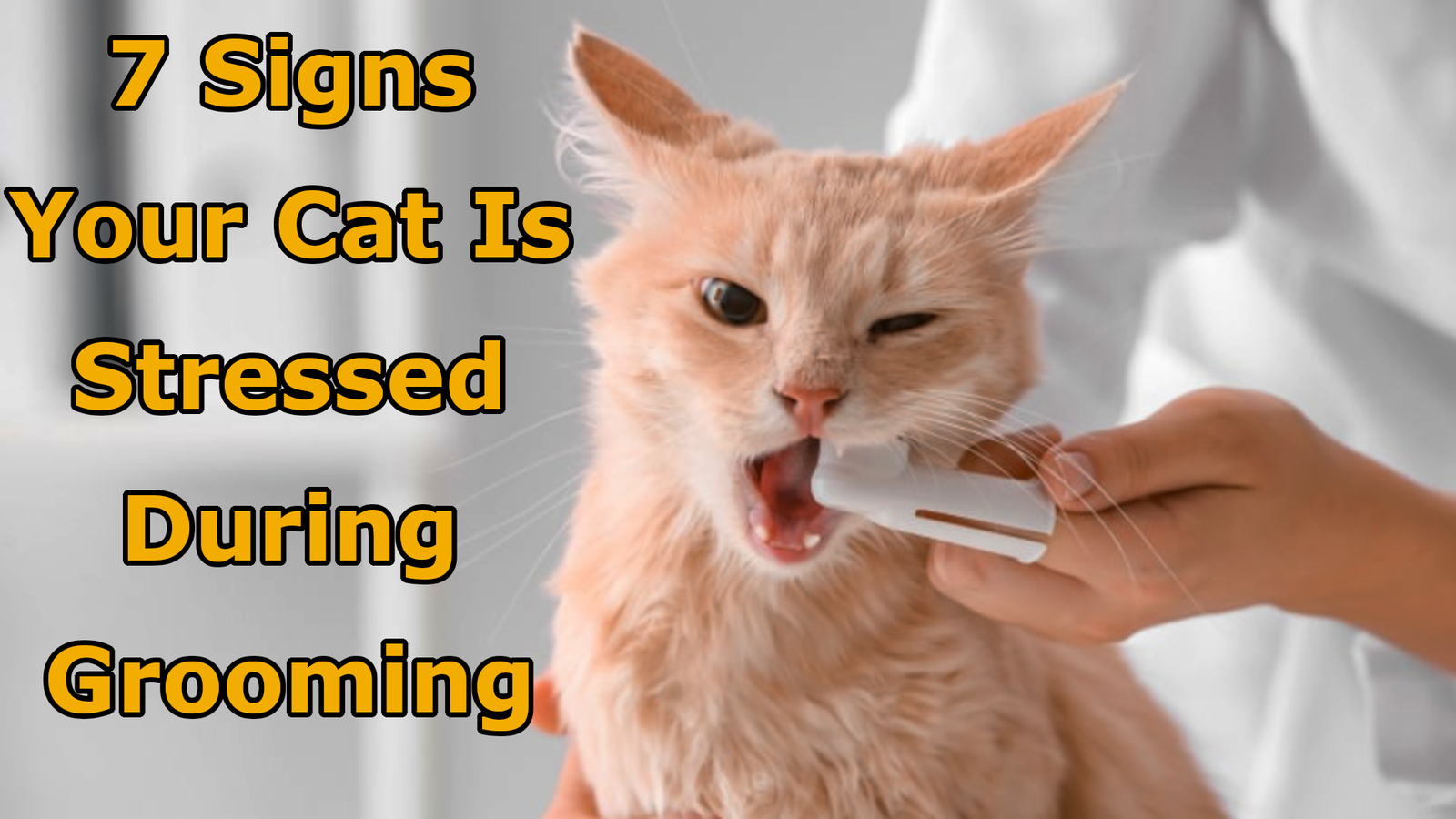
The short answer: a cat stressed during grooming shows early signals like skin rippling, tail twitching, flattened ears, and dilated pupils before she ever hisses or swats. Stop at the first sign you see. Waiting for the hiss is waiting too long.
- Cats hide discomfort, so early signs are easy to miss.
- The earliest signals are skin rippling and tail tip twitching.
- Flattened ears and dilated pupils mean a hiss or swat is close.
- Stop before your cat asks you to stop, ideally within one minute of the first sign.
- Every time you stop when she asks, you build trust for the next session.
What’s in this guide
- Why recognizing stress signs matters
- 7 signs your cat is stressed during grooming
- When to stop grooming
- How to calm a stressed cat
- How to prevent stress before grooming starts
- The difference between stress and fear
- Frequently asked questions
- The bottom line
Why recognizing stress signs matters
Cats are masters of hiding discomfort. In the wild, showing weakness makes them a target. So a cat stressed during grooming will try to hide her stress for as long as possible. By the time she hisses or swats, she has already been uncomfortable for a while.
Learning to spot the early signs allows you to stop before your cat feels forced to defend herself. This is not just about avoiding scratches. Repeated stressful grooming sessions can damage your cat’s trust in you permanently. That is why noticing a cat stressed during grooming early matters more than finishing the brush stroke. For a slower, more structured approach to grooming a nervous cat, see our guide to how to groom an anxious cat without getting scratched.
7 signs your cat is stressed during grooming
Sign 1: Twitching or rippling skin
The first and earliest sign of stress is often invisible to new cat owners. Watch your cat’s back while you brush. Does the skin along her spine twitch or ripple? This movement means your cat’s nervous system is becoming overstimulated. The skin twitches because the nerves underneath are firing too much.
What to do: stop brushing that area immediately. Move to a spot your cat enjoys, like the cheeks or chin. If the twitching continues across her whole back, end the session.
Sign 2: Tail twitching or thumping
A cat’s tail is a window into her emotions. Unlike dogs, a wagging or thumping tail on a cat does not mean happiness. It means irritation.
Watch for these tail movements during grooming:
- Slow, gentle sway: relaxed, okay to continue
- Tip of tail twitching: slightly annoyed, proceed with caution
- Whole tail thumping or lashing: very irritated, stop soon
- Tail tucked between legs: fearful, stop immediately
What to do: pause grooming. Let your cat relax for a minute. If the tail continues thumping, end the session.
Sign 3: Flattened ears (airplane ears)
When a cat flattens her ears against her head, they look like airplane wings. Flattened ears mean your cat is fearful, annoyed, or overstimulated. She is trying to protect her ears from noise or touch. This is not a sign to continue. It is a warning that a hiss or swat is coming.
What to do: stop grooming immediately. Remove the brush or your hands from your cat. Speak softly and give her space.
Sign 4: Dilated pupils
Look at your cat’s eyes. If her pupils are large and wide even in bright light, she is experiencing fear or high arousal. Dilated pupils are part of the fight-or-flight response. Her body is preparing to defend itself.
What to do: end the grooming session. Do not reach for your cat’s face. Let her calm down in a quiet room.
Important note: dilated pupils can also be a sign of pain or illness. According to the MSD Veterinary Manual, dilated pupils are part of the fear response in cats. If your cat’s pupils are always large, or if they stay large for hours after grooming, consult your veterinarian.
Sign 5: Hiding or trying to escape
When your cat starts backing away, crouching low to the ground, or looking for an exit, she is done. This is not a suggestion. It is a clear request to stop. Some cats will try to move to the edge of the table or counter. Others will look toward the door or under furniture.
What to do: let your cat leave. Do not block her path. Do not pull her back. Forcing her to stay will make future grooming sessions much harder. If your cat hides after grooming, there is more on the psychology behind it in our guide to why some cats hide after a bath.
Sign 6: Hissing, growling, or spitting
These are the most obvious signs that your cat is stressed. By the time your cat hisses or growls, she has already given you several quieter warnings that you may have missed. A hiss means: “I am scared and I will defend myself if you do not stop.”
What to do: stop immediately. Back away slowly. Do not reach for your cat. Give her at least 30 minutes to calm down before attempting any interaction. Do not punish your cat for hissing or growling. She is not being bad. She is communicating the only way she knows how.
Sign 7: Sudden aggression (swatting or biting)
This is the final stage. If your cat swats at you or bites your hand, she is not being mean. She is defending herself because she feels she has no other choice. At this point, your cat stressed during grooming has moved from stressed to over threshold. Her nervous system is so overwhelmed that she cannot think clearly.
What to do: do not punish her. Do not yell. Remove yourself from the situation. If she bites you, gently pull your hand away. Do not yank, as this can cause more injury. Clean any scratches or bites immediately with soap and water. If the skin is broken, monitor for signs of infection.
When to try grooming again: wait at least a full day. Start over with a completely different approach. Use a different tool, a different location, or a different time of day.
When to stop grooming
Many new cat owners ask how long a grooming session should last. The answer depends on your cat. But here is a simple rule: stop grooming before your cat wants you to stop.
For most cats, a successful grooming session lasts between two and five minutes. For very nervous cats, one minute is plenty. Pay attention to the first sign of stress you see. If you notice tail twitching or skin rippling, you have about one minute before your cat escalates to a stronger warning. Use that minute to finish the area you are working on and then stop.
Over time, your cat will tolerate longer sessions. But in the beginning, shorter is better. A cat stressed during grooming is not being difficult. She is asking you to listen.
How to calm a stressed cat during grooming
If you notice early stress signs but do not want to stop completely, try these calming techniques.
Use a softer touch. Sometimes the pressure of the brush is too harsh. Switch to a grooming glove or a soft rubber brush.
Move to a preferred area. Most cats enjoy being brushed on the cheeks, under the chin, or on top of the head. Move to one of these safe zones for a minute before trying a sensitive area again.
Offer a treat mid-session. Keep high-value liquid treats nearby. Stop brushing, offer a taste, then resume. This breaks the stress cycle and creates a positive association.
Use calming pheromones. Spray a feline calming spray on the grooming area or on a towel nearby. These synthetic pheromones signal “safe” to your cat’s brain.
Change your position. Some cats feel trapped if you lean over them. Sit beside your cat instead of standing over her. Let her see the exit at all times.
For a full set of techniques that keep sessions calm from the start, see our guide to how to keep your cat calm during grooming.
How to prevent stress before grooming starts
The best way to handle a stressed cat is to prevent the stress in the first place.
Trim nails before grooming. Sharp nails mean even a small panic jump can cause deep scratches. Trim your cat’s nails 24 hours before any grooming session.
Choose the right time. Do not groom your cat right after she wakes up or right before mealtime. The best time is after a play session when your cat is tired but not sleeping.
Keep sessions short. Set a timer for two minutes. When the timer goes off, stop, even if your cat seems fine. Ending on a positive note teaches your cat that grooming is not a long, scary event.
Use the right tools. A slicker brush is great for removing loose fur but can feel sharp. A grooming glove feels like petting. Start with the glove, then move to the brush. For a step-by-step desensitization plan, see our guide to desensitizing a cat to grooming.
The difference between stress and fear
It helps to understand the difference between mild stress and true fear.
| State | What you see | What to do |
|---|---|---|
| Mild stress | Tail tip twitching, slight skin ripple | Proceed slowly, watch closely |
| Moderate stress | Tail thumping, ears sideways | Pause, offer a treat, consider stopping |
| Severe stress | Hissing, swatting, biting | Stop immediately, end the session |
| Fear | Crouching, pupils dilated, shaking | Stop, do not try again that day |
A stressed cat can often be calmed with gentle techniques. A fearful cat needs time and space. Do not push a fearful cat.
Frequently asked questions
Can I keep grooming if my cat is only showing mild stress signs?
Yes, but proceed slowly. Mild signs like a twitching tail tip mean your cat is uncomfortable but not yet overwhelmed. Move to a preferred grooming area, use a softer touch, and watch for escalation. If the signs worsen, stop.
What if my cat shows no stress signs at all but suddenly bites me?
Some cats freeze instead of showing obvious stress signs. This is called fear paralysis. The cat seems calm but is actually terrified. Then, when she cannot take any more, she bites without warning. If this happens, shorten your grooming sessions significantly. Start with 30 seconds only.
How long should I wait to groom again after my cat was stressed?
Wait at least 24 hours. Give your cat a full day to reset her nervous system. When you try again, change something about the session. Use a different brush, groom in a different room, or try a different time of day.
Are some cats just impossible to groom?
No, but some cats are much harder than others. If your cat becomes aggressive at the sight of a brush, stop trying to groom her at home. Take her to a professional groomer or ask your vet for advice. Some cats benefit from anti-anxiety medication before grooming.
Does age affect stress during grooming?
Yes. Kittens are more adaptable but have shorter attention spans. Senior cats may have arthritis or sensitive skin that makes grooming painful. Adjust your technique based on your cat’s age, and mention any new sensitivity to your vet.
Can I use calming treats before grooming?
Some calming treats work well for mild anxiety. Look for treats containing L-theanine or casein. Test the treat on a normal day first to see how your cat reacts. Do not use sedatives or any medication without consulting your veterinarian.
The bottom line
A cat stressed during grooming is always communicating with you. The twitch of her tail, the flattening of her ears, the ripple of her skin are not random movements. They are her language. Learning to read this language takes practice. You will make mistakes and miss signs sometimes. What matters is that you keep trying.
Every time you stop grooming when your cat asks you to stop, you build trust. Every time you respect her warning signs, she learns that you are safe. That trust will make every future grooming session easier, shorter, and more peaceful for both of you.
Next time you groom your cat, watch for the seven signs. Stop early. Give a treat. And notice how your cat responds differently when she realizes you are listening.
Related reading from CatParentsGuide
- How to Keep Your Cat Calm During Grooming (12 Proven Methods)
- How to Groom an Anxious Cat Without Getting Scratched
- How to Desensitize a Cat to Grooming
- Why Does My Cat Hide After a Bath?
Informational only, based on veterinary sources, and not a substitute for veterinary advice.